
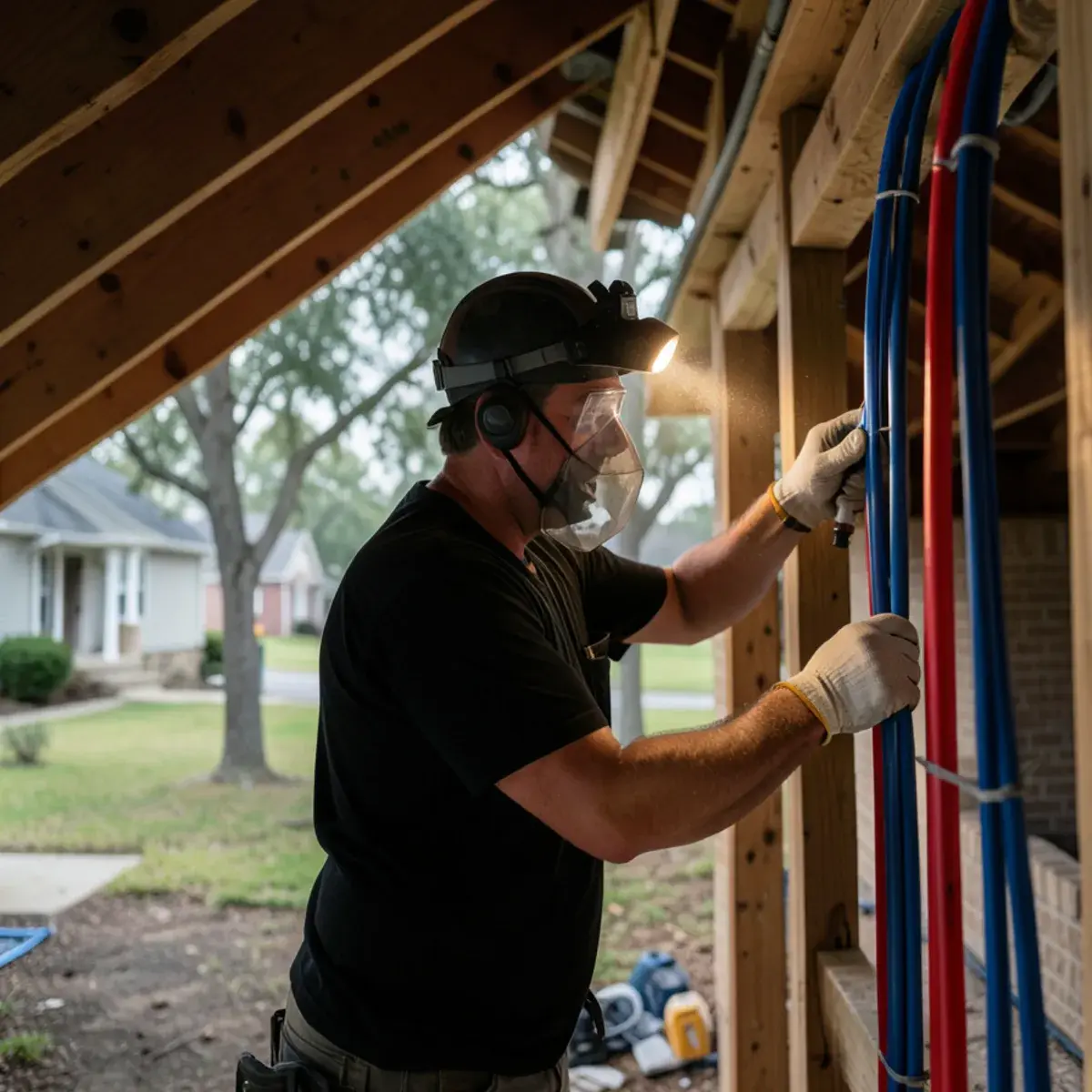
Whole house repiping in Houston makes sense once a home's water lines have started failing as a system: repeat leaks, rusty water, or pressure that keeps falling. On a slab house, new lines usually run through the attic and walls while the old ones stay abandoned under the floor. Compare the plan against your next repair before paying for one.
When is it time to repipe a house?
Repipe when leaks stop being isolated events. A single failure is a repair, and a pattern is a system telling you its working life is over. These are the common signs:
- A second or third pinhole leak, in different rooms
- Brown or rust-tinted water, worse first thing in the morning
- Pressure that has dropped across the whole house
- Gray plastic pipe in the attic, marked PB
- A slab leak on a line that has already been patched
- An inspector or insurer asking about your pipe
Age alone is a poor reason, so have the pipe looked at first. Older houses are a real part of the picture here: Redfin data reported by Axios Houston in 2025 showed 31% of Houston-area homes bought in the prior year were over 30 years old.
More than one leak in a year? Call and talk through a repipe plan.
- ★ 5.0 on Google, 18 reviews
- Sun–Thu 7 AM–8 PM · Fri 7 AM–6 PM · Sat closed
- Clear, upfront quote
Which pipes fail first in Houston homes?
Galvanized and polybutylene are the two materials that usually force the decision.
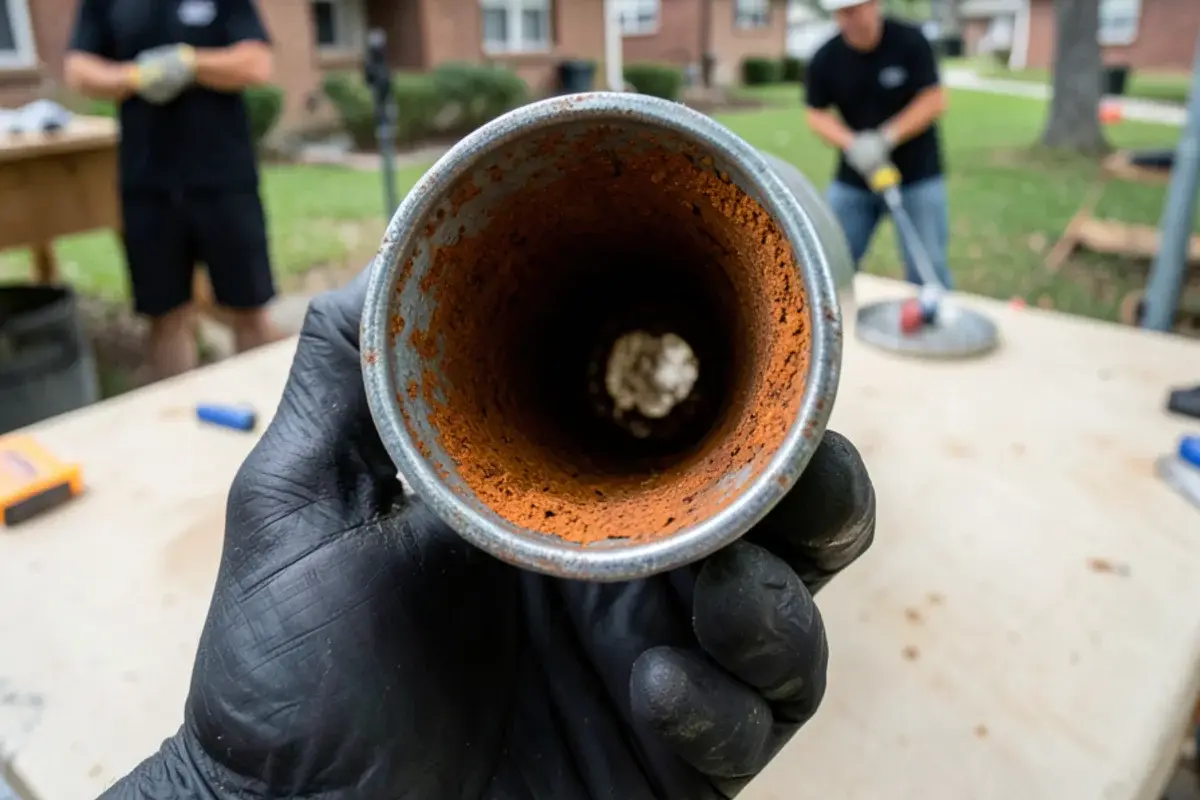
Galvanized pipe replacement is the common job in older homes. EBMUD, a large California water utility, explains the process clearly: zinc coats the steel and corrodes first, and once it is gone the iron rusts and builds mounds inside the pipe that block flow. That leads to low pressure, discolored water and, eventually, leaks. Humidity adds to the outside wear. The EPA also tracks galvanized pipe that sat downstream of a lead service line, because rust can hold lead.
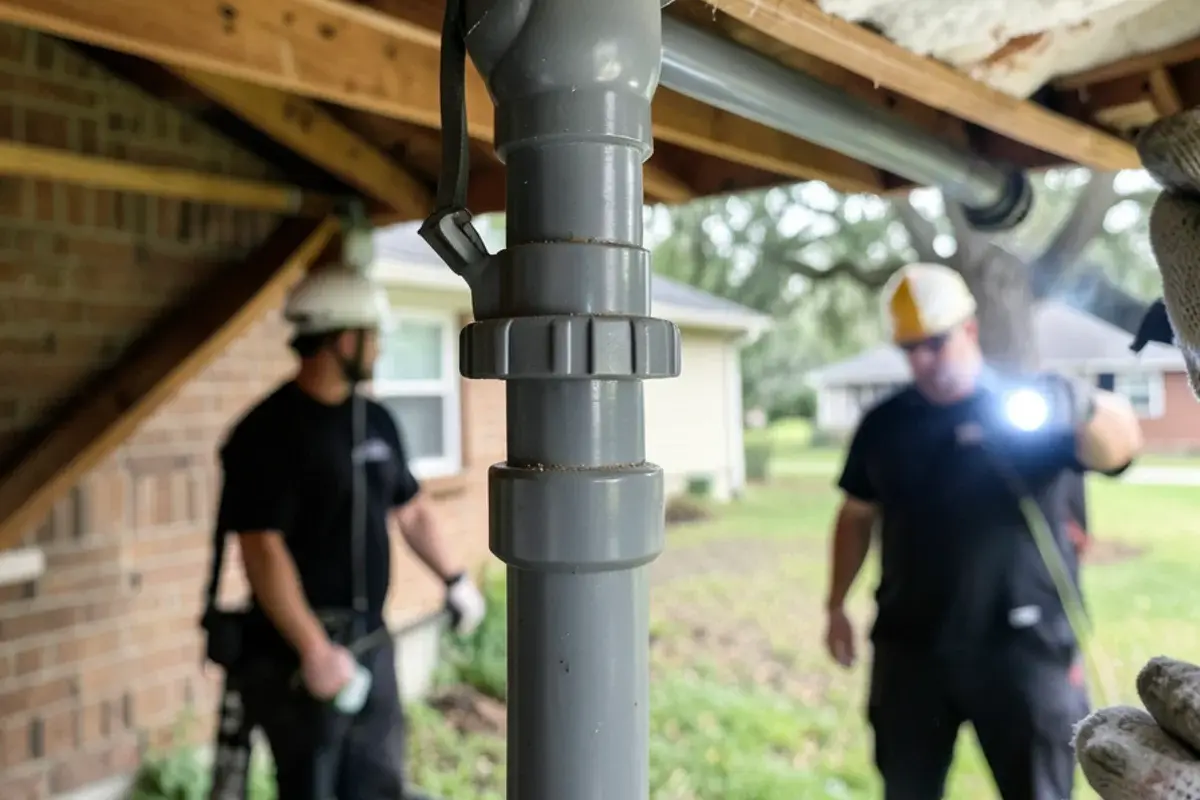
Polybutylene replacement covers gray plastic pipe, installed in several million North American homes from about 1978 into the 1990s. Chlorine in city water attacks the pipe and its fittings from the inside, so it can fail without warning. The Cox v. Shell class action settlement covered systems installed from January 1978 to July 1995. U.S. building codes no longer accept this pipe.
Copper fails more slowly, usually as pinholes, and clay soil adds stress to anything under a slab. Our guide to repair or repipe walks through the choice.
PEX repipe, copper repipe or CPVC?
Most Houston jobs come down to PEX or copper, and the choice depends on route, budget and preference.
| Material | Strength | Weak point | Best fit |
|---|---|---|---|
| PEX | Flexible, few joints, tolerates freezing better than rigid pipe | Must stay out of sunlight, can attract rodents | Attic and wall routes on slab homes |
| Copper | Long record, handles heat and exposed runs | Higher cost, more joints, can pit | Exposed runs, owners who prefer metal |
| CPVC | Lower material cost than copper | Turns brittle with age and rough handling | Smaller or partial jobs |
Cost differs. A field study for HUD's PATH program found PEX installation and materials ran 28% less than copper in identical houses, largely because of fewer fittings.
Standards count. The Houston Permitting Center requires PEX with a minimum chlorine designation code of 5, and PEX tubing and fittings should conform to ASTM F876 and F877. Ask to see the marking on the pipe. City water carries a disinfectant, so this matters for a system you expect to run for decades.
How do you design a repipe for a slab house?
The plan is more about route than material. Under-slab lines are abandoned, and everything new travels overhead, so these decisions shape the job:
- Route: through attic and walls, with drops to each fixture
- Layout: a trunk and branches, or a manifold with one line per fixture
- Pipe size: matched to bathrooms, length of run and pressure, because an undersized line brings back the weak flow you were trying to fix
- Freeze protection: insulation over attic lines, and no runs along cold exterior walls where it can be avoided
- Shut-offs: a working main valve, and fixture stops replaced as part of the job
- Water heater: connections rebuilt, and pressure checked
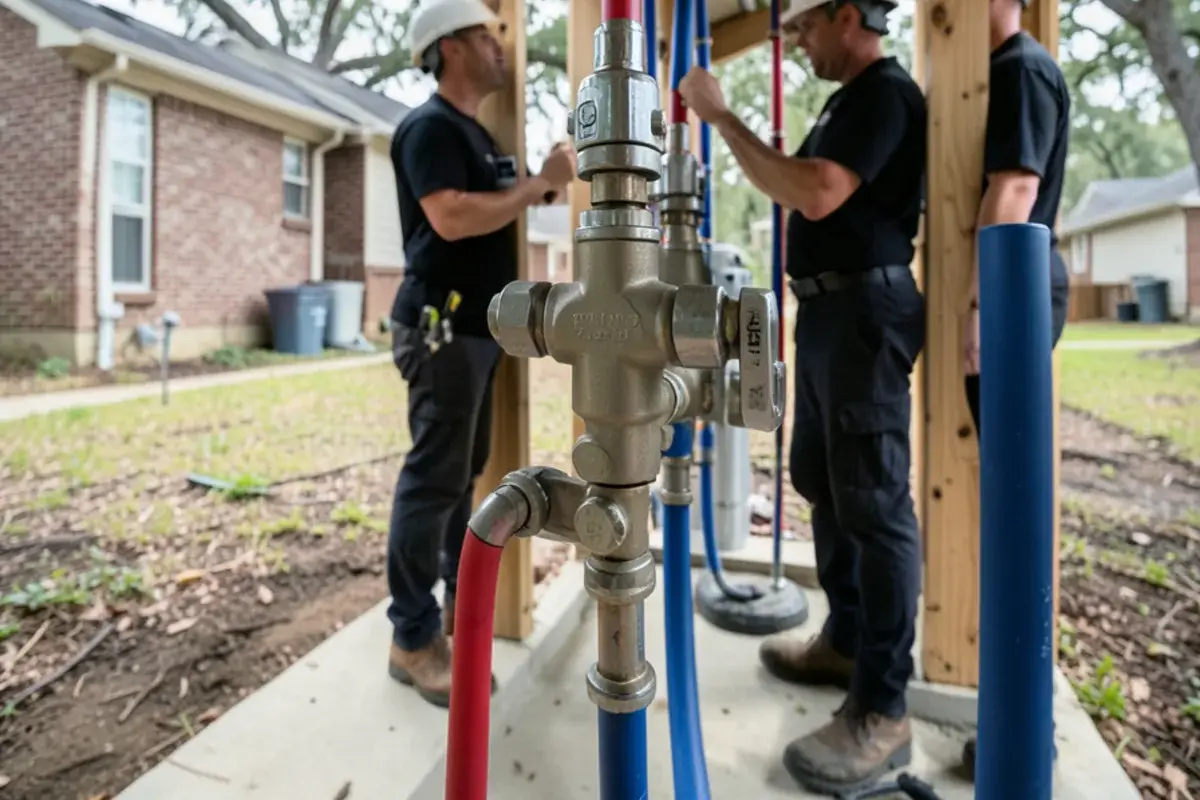
If your pressure is high, plan for a regulator, since new pipe should not inherit that stress. If your water leaves heavy scale, a water softener is worth pricing at the same time.
How does a whole house repiping in Houston job run?
A repipe follows a staged plan so the house stays livable:
- We walk the house, map fixtures and check the existing pipe.
- You get a written scope and a clear, upfront quote, including who handles permits and patching.
- Rooms get protected, furniture is moved, and small openings go in at walls and ceilings.
- New lines run a section at a time, with water restored at day's end where the stage allows.
- Fixtures reconnect, old lines are capped, and the full system is pressure tested and flushed.
- Inspection follows wherever the city requires it, then drywall patching by the agreed trade.
What this work includes:
- Pipe and route plan
- New supply lines to each fixture
- New stops at fixtures in the scope
- Capping of abandoned lines
- A full pressure test and flush
- A walk-through of what changed
A whole house repipe replaces the supply side: the trunk from the main shut-off, the hot and cold branches, and the drops to each fixture, water heater and laundry box. Drains, vents and the sewer stay as they are. Hose bibs and the ice maker line belong in the count, because one forgotten connection leaves old pipe in service. The buried service line from the meter is a separate decision, so the scope should say where the new pipe starts. Old lines under the slab are capped, and any run left in the walls is disconnected so it cannot hold water. Fixture stops and water heater connections get replaced where the scope lists them, so old valves do not sit on new pipe. The final walk-through should cover the main valve, the new layout and any access panels.
Paint and tile are usually separate, so ask how far patching goes in the quote.
What affects the cost to repipe a house?
House size and access set the budget, and we quote after walking the home. Angi's 2026 range of $364 to $2,169, averaging $1,267, describes replacing pipe sections, not a whole home. A full repipe runs higher, and those numbers are market figures, not our prices.
These factors move a repipe quote:
- Fixture count: bathrooms, kitchen, laundry and outdoor faucets
- Stories: a second floor needs vertical runs through finished walls
- Material: PEX or copper
- Access: attic space, cathedral ceilings, tile walls
- Patching: how much drywall is included
- Permits: what your city requires
Houston adds its own variables. Attic runs go slower in summer heat, and a low roofline over a slab house limits how far anyone can crawl. Stucco, tile showers and plaster take more care at each opening, and bathrooms stacked over finished rooms need more drops.
Compare the quote with what you have spent on leaks in the last few years, along with what another one could do to the floors.
What do Texas and Houston rules say about repiping?
Plan on a permit. Houston's exemption for leak repairs stops where pipes get replaced or rearranged, and Deer Park names re-piping among its permit work. The state's drinking water rule, 30 TAC 290.46(j), also calls for a customer service inspection after material changes to private plumbing, so ask your utility how it handles that. An owner doing the work on a Houston homestead can use the City's homeowner permit, CE-1284.
Texas licensing for this work runs through the Texas State Board of Plumbing Examiners. City inspections follow Houston's amended version of the 2021 Uniform Plumbing Code. Ask any plumber quoting your repipe for a license number, and ask in writing who pulls the permit.
How do you look after new pipe?
Good habits protect the new system. Check the house pressure yearly, because high pressure wears any pipe. Keep attic insulation over the lines, and leave it undisturbed after other trades visit. Test the main shut-off valve once a year, and read the meter when a bill looks wrong. Do not hang anything on pipe, and keep PEX away from sunlight during any later attic or remodel work.
Why PipeElectric for whole house repiping?
A repipe puts people in your home for days, so conduct matters as much as craft.
- 18 Google reviews and a 5.0 rating
- Clean work, a big deal with walls open
- On-time arrival and plain explanations, both named by customers
- A clear, upfront quote before the first wall is opened
- Fair pricing, another point customers make
Repiping is a long visit, so a tidy site at the end of each day counts.
Planning calls are welcome from 7 AM, until 8 PM Sunday through Thursday and 6 PM Friday. Saturday stays closed.
We take repipe calls across Houston and nearby, including Bellaire, Spring Valley Village, Alvin and Conroe.
What customers say about our plumbing work
5.0 on Google from 18 reviews, checked October 2026.
“They had someone out to my house within a couple of hours. The technician was professional, he explained everything clearly, located the gas leak, and repaired it on the spot. He even double check the rest of the line to make sure there wasn't any other leak. I really appreciated how honest and thorough they were.I highly recommend PipeElectric to anyone looking for fast, affortable and caring service!”
“Had PipeElectric install a new water heater, and they did a fantastic job! Fast, professional, and no mess left behind. Highly recommend them for any plumbing work!”
“PipeElectric did a great job! Had a issue with some outlets and a small leak under my sink. They showed up on time, real professional and got everything fixed quick. Prices was fair too. Definitely calling them again if I need anything else!”
Whole House Repiping around Houston
- Bellaire · Postwar Bellaire three-bedrooms that escaped teardown can keep original pipe beside newer rebuilds.
- Spring Valley Village · The city's 2024 lead and copper inventory helps owners check lines before planning a repipe.
- Alvin · A third of Alvin homes date from 1960-79, an era of galvanized lines and early copper.
- Conroe · Conroe's 22% of homes from 1980-99 overlap the polybutylene years; at 42 miles, call first.
- Spring · Spring's biggest building decade is the 1970s, so those supply lines are reaching repipe age.
- The Woodlands · Woodlands homes built from 1978 to 1995 fall inside the polybutylene years, so check the attic.
- Jacinto City · Jacinto City's 1941 subdivision homes are old enough to carry galvanized supply lines.
- Baytown · Baytown's pre-1970 homes, a third of its stock, are the ones to check for galvanized.
Whole House Repiping questions
How long does a whole house repipe take?
It usually takes days, and the count depends on size, stories and access. A single-story slab house with an open attic moves faster than a two-story home with bathrooms stacked over finished rooms. Drywall patching adds time after the plumbing. Ask for a written schedule that shows each day's water shutoff.
Can we live in the house during a repipe?
Usually, yes. Crews work in sections, with the water off during the day and back on in the evening where the stage allows. Expect some dust, open walls and noise, and clear access to closets and the attic. Work from home on a shutoff day is hard, so plan around it.
What happens to the old pipe under my slab?
It stays where it is, capped and disconnected. Breaking up a slab to remove dead pipe adds cost and risk with no benefit to the plumbing. Once the new lines are live, the abandoned section holds no pressure and cannot leak. This is the same logic used in a single slab leak reroute.
Is PEX in a Houston attic a good idea?
It can be, if it is done with care. PEX tolerates attic heat and handles a freeze better than rigid pipe, but it still needs insulation and sound support. The Texas Department of Insurance has singled out attics as a key place to protect pipes in a freeze. Bury lines under insulation wherever possible.
When is a spot repair still the better choice?
A spot repair fits a single leak in a sound system, such as a nail through one line or one failed fitting. Look harder at repiping when the pipe is galvanized or polybutylene, when leaks are showing up in different rooms, or when the flooring you would need to open is expensive.
Do I have to repipe before selling my house?
No, not under any blanket Texas rule we know of, but buyers and their insurers can raise it. An inspection flagging polybutylene or galvanized lines often leads to a price talk or a repair request. Get a written repipe quote early, so you can answer with numbers.
Second leak this year? Compare a repipe before paying for the third.
- ★ 5.0 on Google, 18 reviews
- Sun–Thu 7 AM–8 PM · Fri 7 AM–6 PM · Sat closed
- Clear, upfront quote
PipeElectric - Plumbing & Electrical - HVAC · Houston, TX · (321) 559-0657