
By the PipeElectric team · Published October 30, 2026 · Updated October 30, 2026
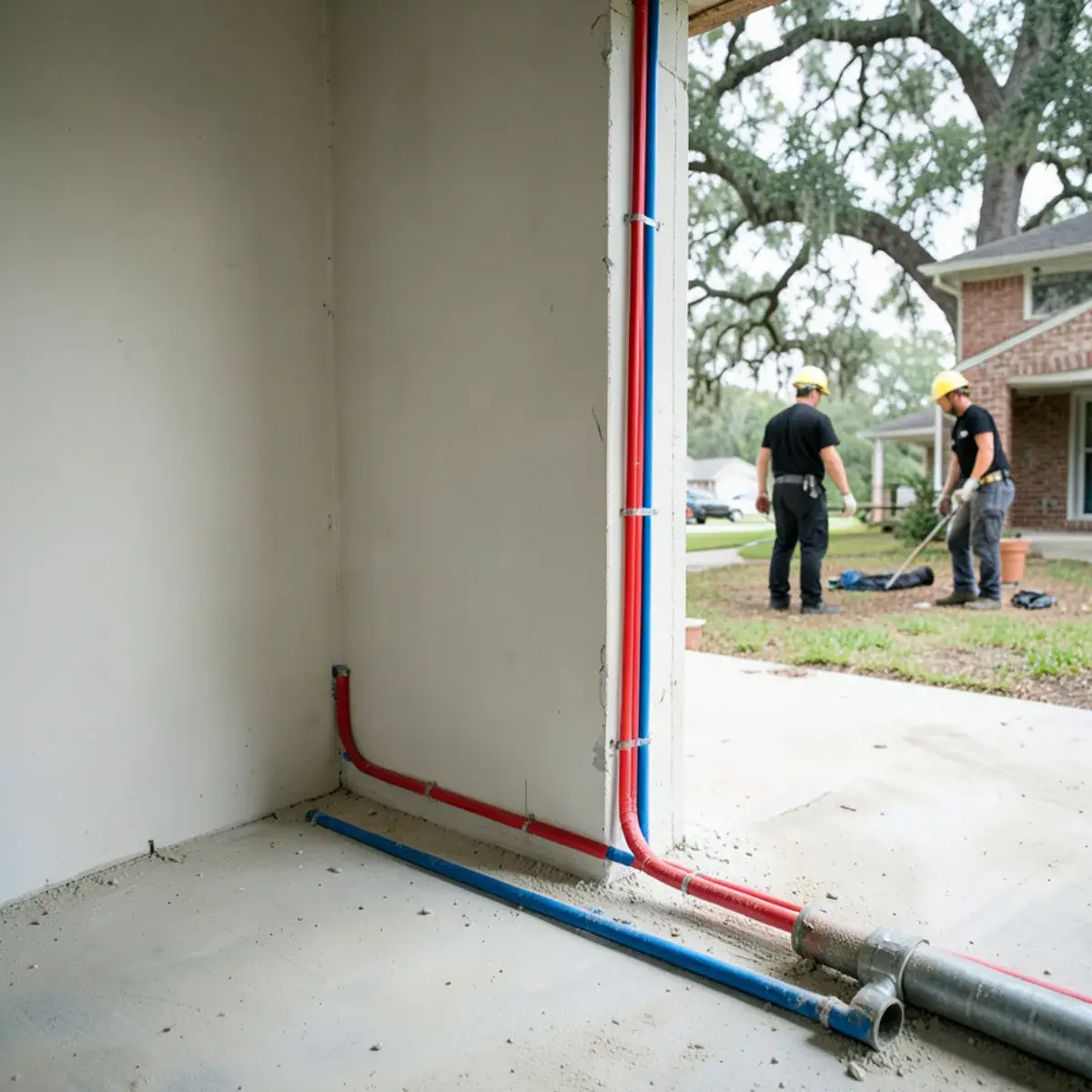
Repipe vs repair is usually a question of pattern. One leak in sound pipe gets a repair. Repeat leaks, a failed material or falling pressure across the house point to a repipe. Answer the six questions below, then check your result against the material in your walls.
How do you score your pipes?
Score your pipes by answering these six questions with yes or no. Count the yes answers:
| Question | Why it matters |
|---|---|
| Have you had two or more leaks in the last few years? | Points to a system problem |
| Is the pipe galvanized steel or polybutylene? | Known limited-life materials |
| Is water pressure low at more than one fixture? | Suggests narrowing inside the pipe |
| Is the water discolored, mostly when first turned on? | Common sign of inner corrosion |
| Did the last leak happen far from the one before it? | Wear is spread out across the house |
| Are you opening walls or floors for a remodel anyway? | Access cost is already paid |
Here is how to read the result:
- 0 to 1 yes: repair and monitor
- 2 to 3 yes: repair now, and get a whole-system opinion
- 4 or more yes: price a repipe before fixing the next leak
The score only sorts the question. It does not replace a pressure test or a look at the pipe.
Not sure what is in your walls? Call and describe what you have seen.
- ★ 5.0 on Google, 18 reviews
- Sun–Thu 7 AM–8 PM · Fri 7 AM–6 PM · Sat closed
- Clear, upfront quote
When is a spot repair the right call?
A spot repair is right when the cause is local and the rest of the pipe is healthy. These situations fit:
- A nail or screw hit the line during other work
- A single fitting failed
- A freeze split one exposed section
- A connector or shut-off valve at a fixture leaked
- The leak has a clear outside cause, such as ground movement at one point
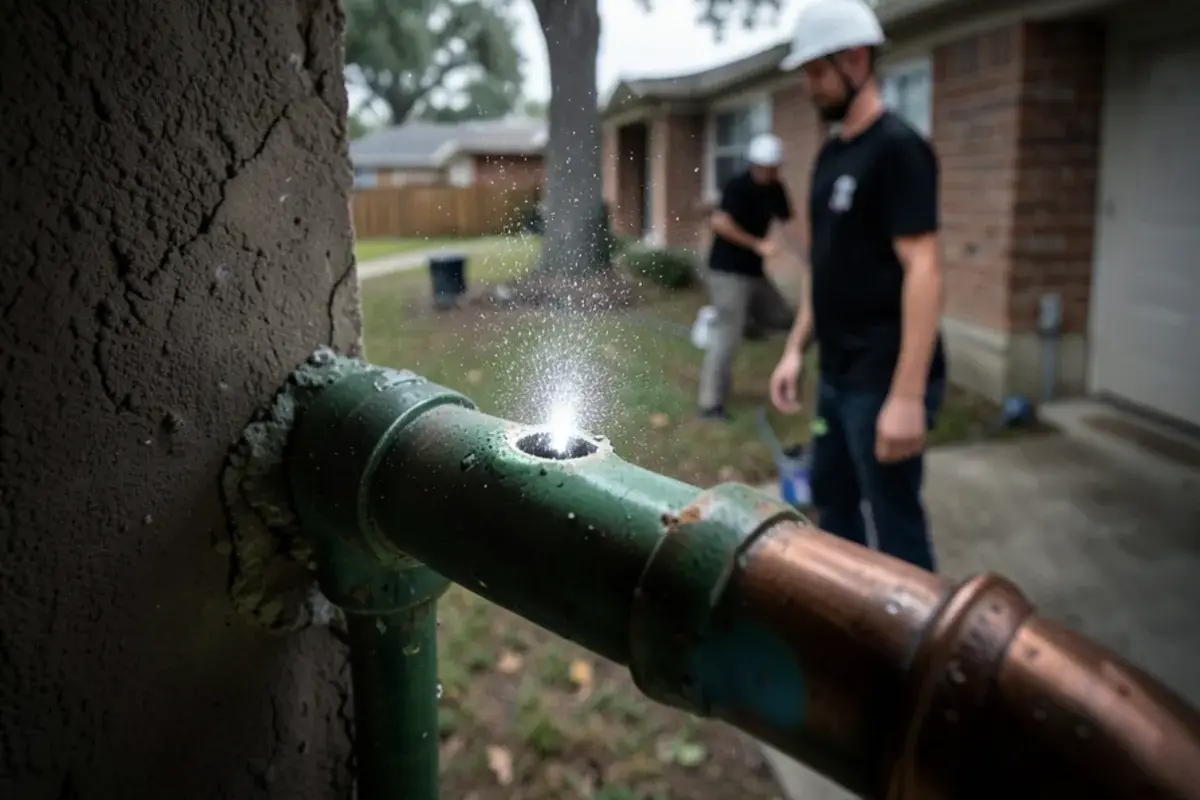
Ask for the removed piece of pipe and look at the inside. Clean walls support a local repair. Pitting or heavy buildup on that sample is evidence the rest may look the same. For a leak under the floor, slab leak repair explains how spot repair compares with a reroute.
Check the pressure at the same visit. A gauge on a hose bib takes minutes, and high static pressure wears out joints and valves in old pipe and new. The Uniform Plumbing Code calls for a pressure regulator where static pressure runs above 80 psi. If yours reads higher, fix that first, or the next leak may have nothing to do with the pipe's age.
When does a repipe earn its cost?
A repipe earns its cost when each new leak brings drywall, flooring and cleanup bills on top of the plumber's bill. Hidden damage is the real expense. The pipe repair may be the smallest part of a leak inside a wall.
The case is strongest with these materials:
- Galvanized steel: Wikipedia gives it a service life of about 30 to 50 years, shorter with corrosive water. Once the zinc coating wears off, rust and mineral deposits block flow. It was common until about 1960.
- Polybutylene: Installed from about 1978 to 1997, then tied to a class action over leaks. Chlorine in city water can attack the pipe from inside, and Wikipedia's entry says full replacement is the only long-term solution.
- Anything containing lead: EPA says lead pipes are likelier in homes built before 1986 and points owners to their water utility or a plumber to check.
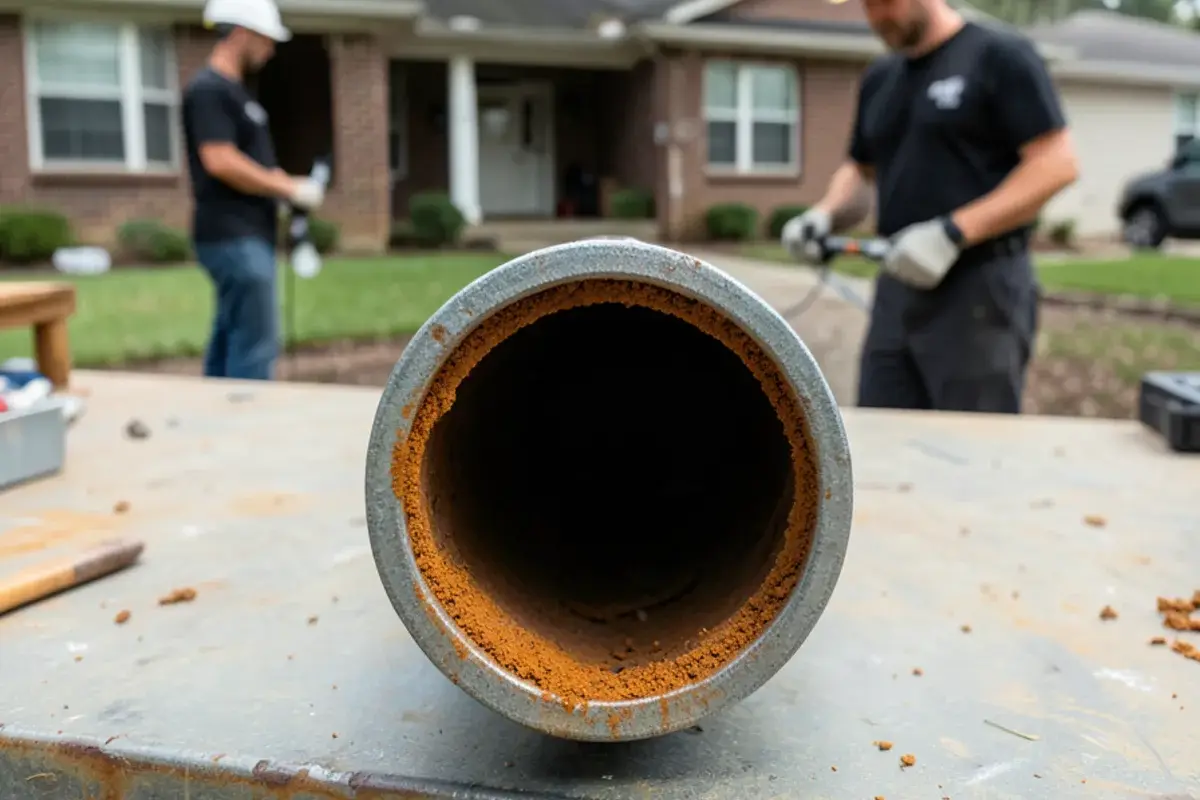
Pinhole leaks in copper
Copper needs its own reading. A string of pinholes usually points to the water and not to the installer. Science News reported in 2008 on Virginia Tech research that linked severe pitting to higher pH combined with higher chlorine, and a related study found repair costs of about $1,300 to over $18,000 in the Maryland homes it covered. Those are dated figures from one region, and they are not PipeElectric prices.
Ask your neighbors and your water supplier whether others on the street are seeing pinholes. If they are, repairing one spot at a time will likely keep you busy, and that moves copper up the list for replacement.
Which pipe do you have, and what does it mean for repipe vs repair?
Your pipe material often settles the question. Check exposed runs at the water heater, under sinks and in the garage:
| Material | What it looks like | Usual verdict |
|---|---|---|
| Galvanized steel | Dull gray, threaded joints | Repipe likely if original |
| Polybutylene | Gray flexible pipe, crimp rings | Plan replacement |
| Copper | Reddish or brown, soldered joints | Repair first, watch for repeats |
| CPVC | Cream or off-white rigid plastic | Repair, check for brittleness |
| PEX | Red, blue or white flexible tube | Repair |
| Lead | Soft, dull gray, scratches bright | Replace, and talk to your utility |
Any home built between 1978 and 1997 deserves a second look for polybutylene, in Sugar Land or anywhere else, since that is the installation window. Check your own house, because builders and remodels vary. A rebuilt or remodeled home can also hold new supply lines next to a much older service connection.
What does a whole house repipe involve?
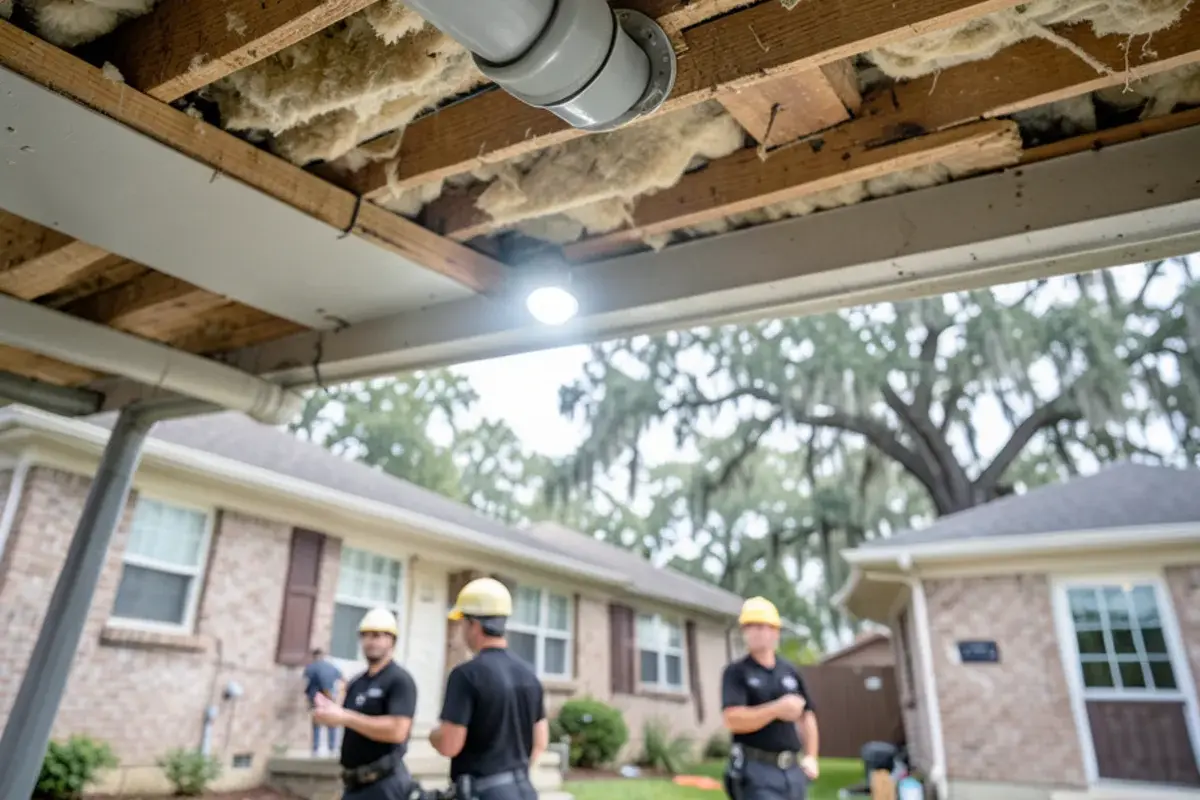
A slab foundation sets the route. A Houston repipe usually leaves the old lines under the concrete and runs new ones through the attic and walls. The usual order looks like this:
- Walk the house, map each fixture and agree on where walls will be opened.
- Check with the city's permit office on the permit and inspections the job needs.
- Run new lines to each fixture while the old system keeps the house in water.
- Cut over one fixture group at a time, with planned shutoffs.
- Pressure test the new pipe and have it inspected before walls close.
- Patch the openings, or hand off to a drywall contractor.
Attic runs in Houston need insulation, since a hard freeze finds those lines first. If you choose PEX, ask for pipe with chlorine designation code 5, which the Houston Permitting Center ties to ASTM F876 and F877.
What does a repipe cost compared with a repair?
A repipe costs far more once, and a repair can cost more over time if leaks repeat. Bob Vila's 2023 guide, citing Angi and HomeAdvisor, gives a typical repipe range of $1,500 to $15,000 and a national average of $7,500. The same guide lists material at about $0.40 to $2 per foot for PEX and $2 to $8 per foot for copper, so labor and access usually outweigh the pipe itself. Treat all of that as dated market data and not as a PipeElectric price. Your price follows the quote, which comes after a look at the job.
These factors move the number most:
- Number of fixtures and bathrooms
- One story or two
- Pipe material chosen
- Access through attic, walls or slab
- Patching and paint, which may be separate work
- Whether the main water line is included
Add up your last three years of leak costs, including drywall, flooring and deductibles. That total is the fair number to weigh against a repipe.
How does our team think about the second leak?
Our team treats the second leak as the moment to stop and look at the whole system. One leak tells you little. A second, especially in a different spot, is information. It is worth paying for a pressure test and an honest look at the pipe before fixing it the same way.
Timing helps too. If you plan to replace floors or remodel a bath, do the plumbing first while the access is open. Also think about how long you will stay. A homeowner selling next year has different math from one staying for 15 years.
What is the bottom line on repipe vs repair?
Repair the one-off failure. Replace the failed system. The scorecard tells you which case you are in, and the pipe material usually confirms it. When you are unsure, start with leak detection so the decision rests on evidence.
Homeowners in Sugar Land, Bellaire and across Houston can read more about whole house repiping. Call with your home's age, pipe type and leak history, and ask for a clear, upfront quote for both paths.
Common questions
Can part of a house be repiped?
Yes. A partial repipe replaces one branch, usually a hot line or the run to one wing. It suits a home where one line has failed repeatedly and the rest tests sound. The trade-off is that old and new materials stay in service together, so ask how the connection is made and what remains at risk in the old section.
Do I have to move out during a repipe?
Usually not, though it depends on the size of the job and the layout. Water is off during parts of the work, and walls or ceilings are opened at planned points, so kitchens and baths can be out of action for stretches. Ask for the expected shutoff schedule before work starts, and plan drywall patching as a separate line.
How many days does repiping a house usually take?
Bob Vila's 2023 guide says anywhere from a few days to a few weeks, depending on house size and how hard the pipes are to reach. A one-story slab home with open attic access tends to sit at the shorter end. Two stories, finished ceilings and a long list of fixtures add time. Ask for a day-by-day shutoff schedule before work begins.
Second leak this year? Call and talk through repair against repipe.
- ★ 5.0 on Google, 18 reviews
- Sun–Thu 7 AM–8 PM · Fri 7 AM–6 PM · Sat closed
- Clear, upfront quote
Written by the PipeElectric team
PipeElectric is a Houston plumbing company with 18 Google reviews and a 5.0 rating. Read about us.