
By the PipeElectric team · Published October 30, 2026 · Updated October 30, 2026
A winter plumbing checklist for Houston looks nothing like one from Ohio. There is no snow load and no basement to seal. The real risks are exposed lines in attics and garages, outdoor faucets, sprinkler systems and a main valve nobody has tested. Walk your house in the order below on a mild November day.
Outside the house
Start outdoors, since those pipes meet the cold first. This part takes about 30 minutes:
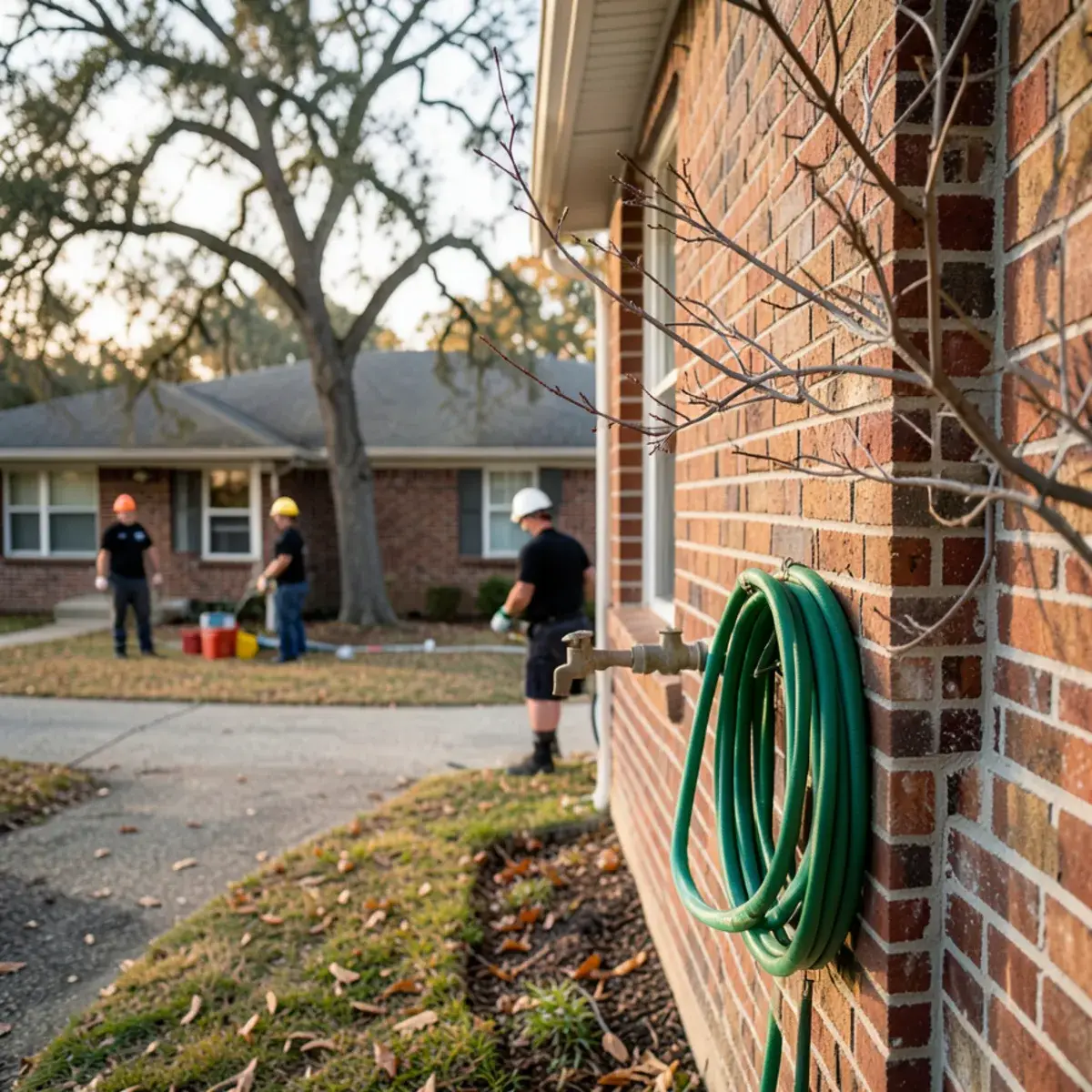
- Disconnect every garden hose and drain it
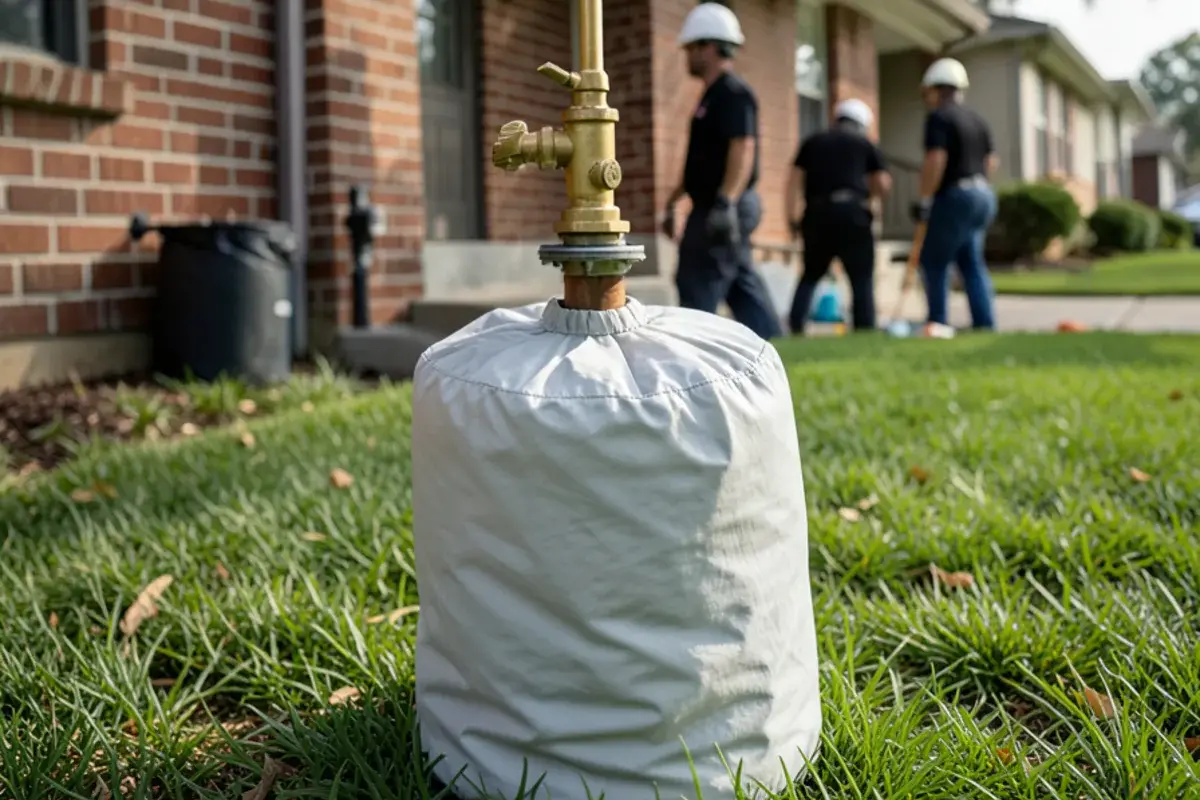
- Fit a cover on each outdoor faucet
- Wrap any exposed pipe on exterior walls
- Turn off automatic sprinkler schedules before a freeze
- Protect the sprinkler backflow assembly if it sits above ground
- Find your water meter box and clear it of soil and ants
- Note where the pool equipment lines run
A hose left attached traps water in the faucet, which is why it comes first. Katy's January 2026 freeze guidance, reported by the Houston Chronicle, also urged residents to drain water lines for pools and sprinkler systems. FOX 26's guide that week advised keeping the pool pump running. Follow your pool installer's advice and your utility's notices, and choose one plan before the forecast turns.
Texas A&M AgriLife Extension says not to put antifreeze in pool or sprinkler lines, as it can harm people, pets and landscaping. On a pier-and-beam house, add one more item: walk the skirting and close any gaps, because wind under the floor reaches pipes the same way it does in an attic.
Faucet dripping or hose bib stuck? Fix it while the weather is mild.
- ★ 5.0 on Google, 18 reviews
- Sun–Thu 7 AM–8 PM · Fri 7 AM–6 PM · Sat closed
- Clear, upfront quote
In the attic and garage
Move to the unheated spaces next, because these two rooms cause most Houston freeze breaks. Both follow the outdoor temperature:
- Trace every water line in the attic
- Add foam sleeves to any bare section
- Check that insulation covers the pipe from above
- Look at the attic water heater or tankless unit, if you have one
- Check the drain pan under any attic unit for rust
- Insulate garage lines to the water heater and the washer
- Keep the garage door closed on cold nights
Water heaters in attics deserve a closer look, since a leak there comes through your ceiling. A clear drain line from the pan matters as much as the heater.
How to insulate a pipe so it works
Insulation slows heat loss, and it does not add heat, so gaps matter. Fit each section this way:
- Match the foam sleeve to the pipe size, so it closes without a gap
- Tape the seams, and miter or wrap the elbows and valves
- Cover the hot lines too, since AgriLife notes they freeze when no water is moving
- Use only UL-listed heat tape or cable, and follow the maker's rules
- Keep wind off the pipe, as AgriLife says wind speeds freezing
Inside the home
Indoors, the goal is to know your valves and catch slow leaks. Allow 20 minutes:
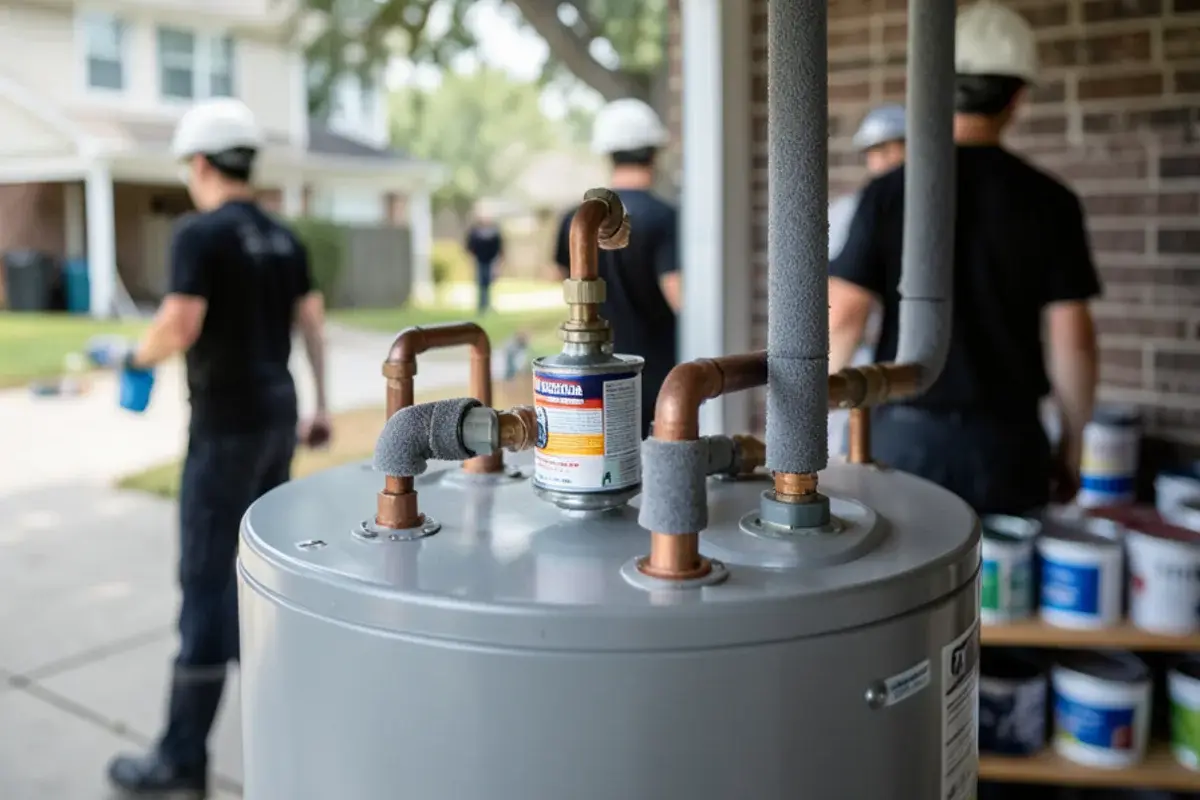
- Find the main shut-off valve and turn it fully off and on
- Show each adult in the home where it is
- Turn each fixture shut-off, and replace any that will not move
- Check under sinks for dampness or stains
- Look over washer hoses for bulges
- Run the meter test with all water off for 15 minutes
- Note which sink cabinets sit on outside walls
Those outside-wall cabinets are the ones to open during a freeze. A moving meter on a still house means a leak, and winter is a fine time to trace it with leak detection.
At the water heater
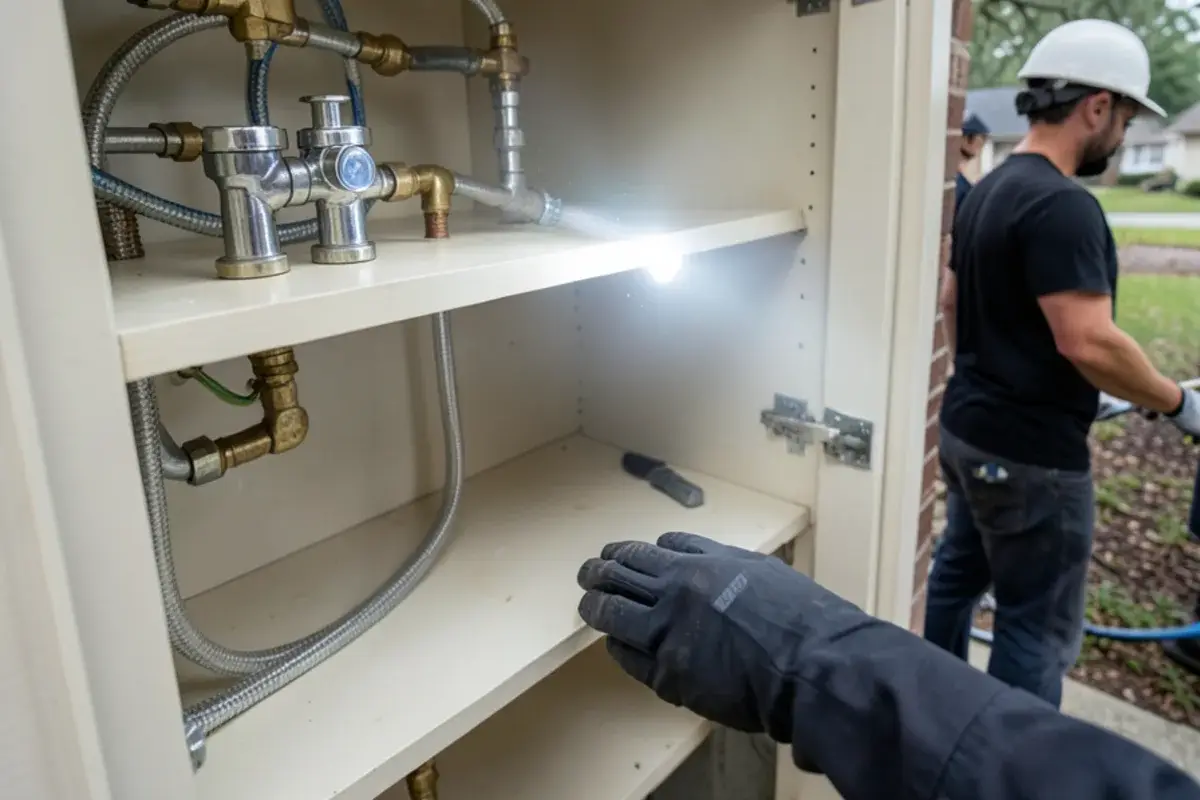
Your water heater works harder in cooler months, because the incoming water is colder. A short check now can avoid a cold shower later:
- Confirm the temperature setting is about 120 degrees
- Look at the base for rust or moisture
- Listen for popping or rumbling when it fires
- Check the flue connection on a gas unit
- Test the carbon monoxide alarm, as Ready.gov advises
- Read the manual on freeze protection for any outdoor tankless unit
That last item matters in a power cut. Many outdoor tankless units protect themselves with small electric heaters, so an outage can leave them exposed. The manual explains how to drain the unit if the power goes out during a freeze.
If the unit rumbles or the base is wet, read our water heater repair page, or use the annual water heater maintenance checklist for the full routine.
What should go in a Houston freeze kit?
Buy it now and keep it in one box. Texas A&M AgriLife Extension says pipe wrap and heat tape often sell out once freeze warnings go out, and it advises getting ready in October or November and leaving protections in place through March or April. Most Texas freezes, it says, come in late January and February.
Here is what belongs in the box:
- Foam pipe sleeves, tape and scissors
- Insulated faucet covers, one for each outdoor spigot
- A meter key for the valve at the street
- A headlamp or flashlight with fresh batteries
- A bucket, towels and a wet vacuum if you own one
- Your plumber's number, plus your utility's emergency line
The meter key earns its place. If your indoor main valve fails during a burst, that tool lets you close the water at the meter box. Check first whether your utility allows it.
What can a Houston winter plumbing checklist skip?
Skip most of what northern checklists recommend, because it solves problems Houston rarely has. You can leave these off:
| Northern advice | Why it does not fit a Houston home |
|---|---|
| Sealing a basement rim joist | Most homes here sit on slabs |
| Adding antifreeze to drain traps | Only for long vacant homes in deep cold |
| Blowing out sprinklers each fall | Off and protected usually covers a short freeze |
| Clearing ice dams from gutters | Ice on a Houston roof is a rare event |
| Heating an empty house all season | Freezes here last days, so watch the forecast |
Rare does not mean never. The National Weather Service logged 12 degrees at Houston Intercontinental Airport on February 16, 2021, and it listed broken pipes among the storm's impacts. AgriLife says pipes can freeze and burst at 20 degrees or below, so a repeat would hit the same soft spots listed above. Spend your time on those.
What does our team do first each winter?
Our team's advice is to start with the main valve, even before the hoses. It is the single item that limits every kind of water damage. A valve that has not moved in ten years may not close when you need it, and a stuck valve is much cheaper to replace on a calm Tuesday than during a burst.
After that, put two things in one spot: a flashlight and a list of who to call. In a real break, nobody wants to hunt for either. Write the location of the main valve on the inside of a cabinet door so a guest or sitter can find it.
Older homes need extra care. A house that has seen decades of remodels, whether in West University Place or Spring Valley Village, can have a line running somewhere nobody expects. An attic walk shows you what is there.
What should you do when a freeze warning goes out?
Move from this checklist to the short-term steps as soon as the forecast calls for a hard freeze. Open cabinets on outside walls, cover anything you left bare, and check your own water utility's notice on dripping faucets. Advice has differed between cities, so do not assume. Our guide to preparing Houston pipes for a hard freeze has the countdown.
Anything you find today is cheap to fix. Add small items to one plumbing repair visit, ask for a clear, upfront quote, and go into the season with your valves working.
Common questions
Do I need to winterize my house if I leave for the holidays?
A full drain-down is rarely needed on a normal Houston trip. Shut off the main valve and leave the heat at a low setting. That one step limits the damage from any leak while you are gone, whether it comes from cold or a failed connector. Watch the forecast, and have a neighbor look in if a freeze is coming.
When should I do this checklist in Houston?
November suits most years, once the summer heat has broken and before the first real cold front. Daytime attic temperatures are comfortable by then, and hardware stores still have foam sleeves and faucet covers on the shelf. Those shelves can empty fast when a hard freeze makes the news, so buying early is cheap insurance.
Do I need to cover outdoor faucets for a light frost in Houston?
Not always, but covers are cheap and take a minute to fit. AgriLife Extension puts the burst risk at 20 degrees or below, and it advises caution anytime temperatures dip below freezing. A short frost rarely hurts a faucet on a sheltered wall. A north-facing faucet in wind is another matter, so cover anything exposed when a front is coming.
Found something on the checklist? Call and get it fixed before the cold.
- ★ 5.0 on Google, 18 reviews
- Sun–Thu 7 AM–8 PM · Fri 7 AM–6 PM · Sat closed
- Clear, upfront quote
Written by the PipeElectric team
PipeElectric is a Houston plumbing company with 18 Google reviews and a 5.0 rating. Read about us.
Sources
- FOX 26 Houston: What to do ahead of weekend freeze, January 22, 2026
- Houston Chronicle via Yahoo News: Should you drip your faucet during freezing weather? January 21, 2026
- Ready.gov: Winter Weather
- National Weather Service Houston/Galveston: Valentine's 2021 winter storm review
- Texas A&M AgriLife Extension: Winter Storms, Preventing and Thawing Frozen Pipes
- Texas A&M AgriLife Today: Protect livestock, plants, pipes and pets from winter weather, January 22, 2026
- Texas A&M AgriLife Today: Prepare for winter weather, January 16, 2025