
By the PipeElectric team · Published October 30, 2026 · Updated October 30, 2026
This water heater maintenance checklist has six yearly jobs: check the temperature, test the relief valve, flush sediment, inspect the anode, look over the venting, and check for leaks. Most take minutes. Set aside about an hour, and read your heater's manual first, since the maker's steps come before any general list.
What goes on a water heater maintenance checklist?
The yearly list covers safety, leaks and tank life. Use this table as your schedule:
| Job | How often | Who does it | Time |
|---|---|---|---|
| Check temperature at the tap | Yearly | Homeowner | 5 minutes |
| Look for leaks and rust | Every few months | Homeowner | 2 minutes |
| Test the relief valve | Yearly | Homeowner, with care | 5 minutes |
| Flush sediment | Yearly | Homeowner or plumber | 30 to 45 minutes |
| Inspect the anode | Every few years | Plumber | 20 minutes |
| Check gas vent and flame | Yearly | Plumber or gas technician | 15 minutes |
| Descale a tankless unit | Per the maker's schedule | Plumber | About an hour |
| Check house pressure and expansion tank | Yearly | Homeowner, then plumber | 10 minutes |
| Clear the pan and its drain line | Yearly | Homeowner | 5 minutes |
Before you touch anything, know how to shut it down. On electric units, turn off the breaker. On gas units, set the control to pilot or off. Then close the cold water valve above the tank when the job calls for it.
Pick one date and keep it. The first cool week after hurricane season works well in Houston, because an attic is bearable by then. Write the date and what you found on a tag taped to the tank, so the next person does not have to guess.
Water heater acting up during your checks? Call before it leaks.
- ★ 5.0 on Google, 18 reviews
- Sun–Thu 7 AM–8 PM · Fri 7 AM–6 PM · Sat closed
- Clear, upfront quote
How do you check the temperature?
Check it at a faucet, not on the dial. The Consumer Product Safety Commission urges users to set water heaters to 120 degrees. Hold a thermometer under the hot tap nearest the heater after the water has run a minute. Adjust by small steps and test again.
The burn numbers explain why it matters. CPSC's scald figures for third-degree burns in most adults are two seconds at 150 degrees, six seconds at 140 and thirty seconds at 130. Children and older adults face the greatest danger.
There is a balance to strike. Wikipedia's water heating entry notes that water kept too cool can allow bacteria such as Legionella to grow, and that a tempering valve can let a tank store hotter water while delivering safer water at the tap. If someone in your home has a weakened immune system, ask a plumber or doctor about the right setup.
How do you test the relief valve?
Lift the lever briefly and let it snap back. The temperature and pressure relief valve dumps water if the tank overheats or over-pressurizes, so it is the heater's main safety device. A valve that will not move, or drips afterward, needs replacing.
Use these steps:
- Put a bucket under the discharge pipe.
- Warn everyone that hot water will come out.
- Lift the lever a short way for a few seconds.
- Release it, and check that the flow stops.
- Look at the discharge pipe. It must stay open and run to a safe spot.
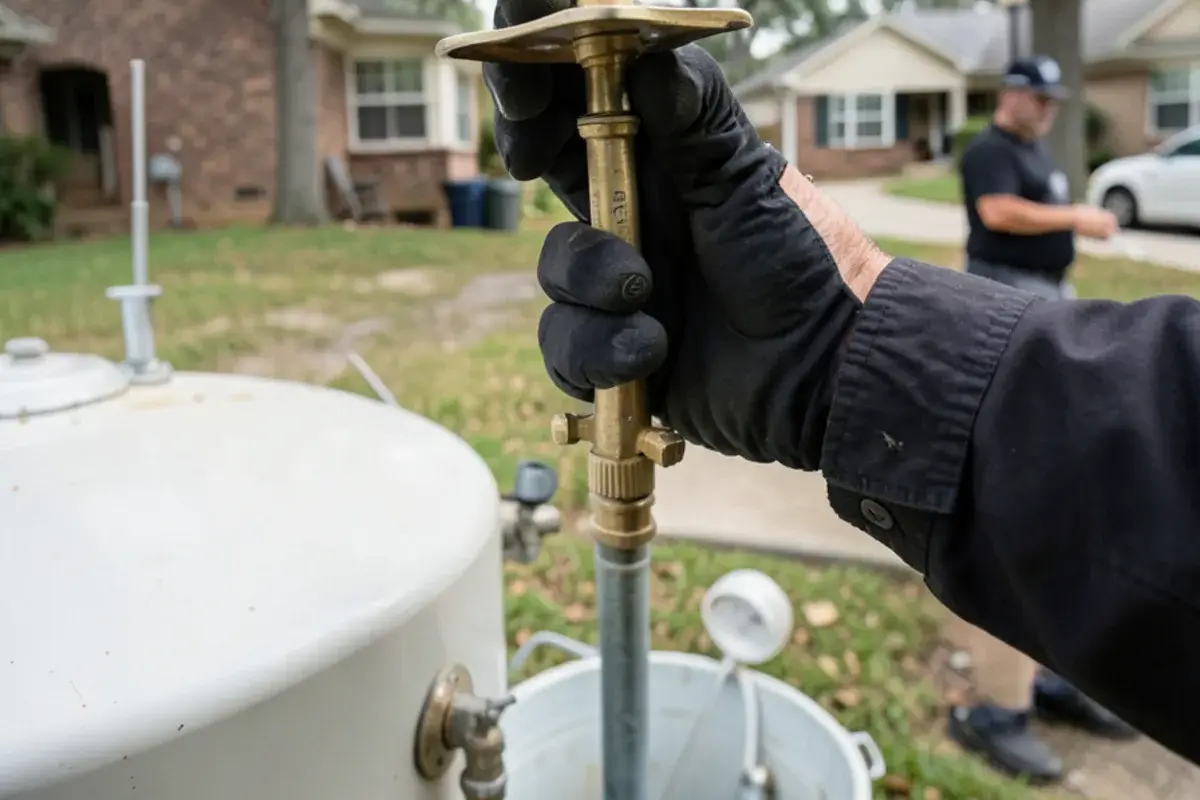
Never cap or plug that pipe. If the valve weeps all the time, the cause may be high water pressure or thermal expansion, and a plumber should check both.
How do you check house pressure and the expansion tank?
A cheap gauge from a hardware store does most of this job. Screw it onto a hose bib, open the bib, and read the needle with no water running in the house. The Uniform Plumbing Code sets 80 psi of static pressure as the point where a regulator is required. A reading higher than that can wear on the tank, the relief valve and every fixture in the house.
Heating water makes it expand. Homes with a check valve or regulator at the meter have nowhere for that extra volume to go, which is why many heaters have a small expansion tank on the cold line. Use these quick checks:
- Find the tank, usually a small steel bottle near the heater.
- Tap the top and the bottom. It should sound hollow at the top.
- Press the valve stem on the end, as you would on a tire.
- If water comes out, the bladder has failed and the tank needs replacing.
How do you flush sediment from the tank?
Drain a few gallons at a time until the water runs clear. Sediment settles at the bottom, where it insulates the water from the burner, wastes fuel and causes a popping or rumbling sound. Here is the usual method:
- Turn the heater off, using the breaker or the gas control.
- Let the water cool, or wait a few hours.
- Attach a garden hose at the drain valve, with the far end at a safe outdoor spot.
- Open a hot tap in the house so air can enter.
- Open the drain valve and let it run.
- Close the drain, briefly open the cold valve to stir the bottom, then drain again.
- Close the drain, refill until hot taps run steady, then restore power or gas.
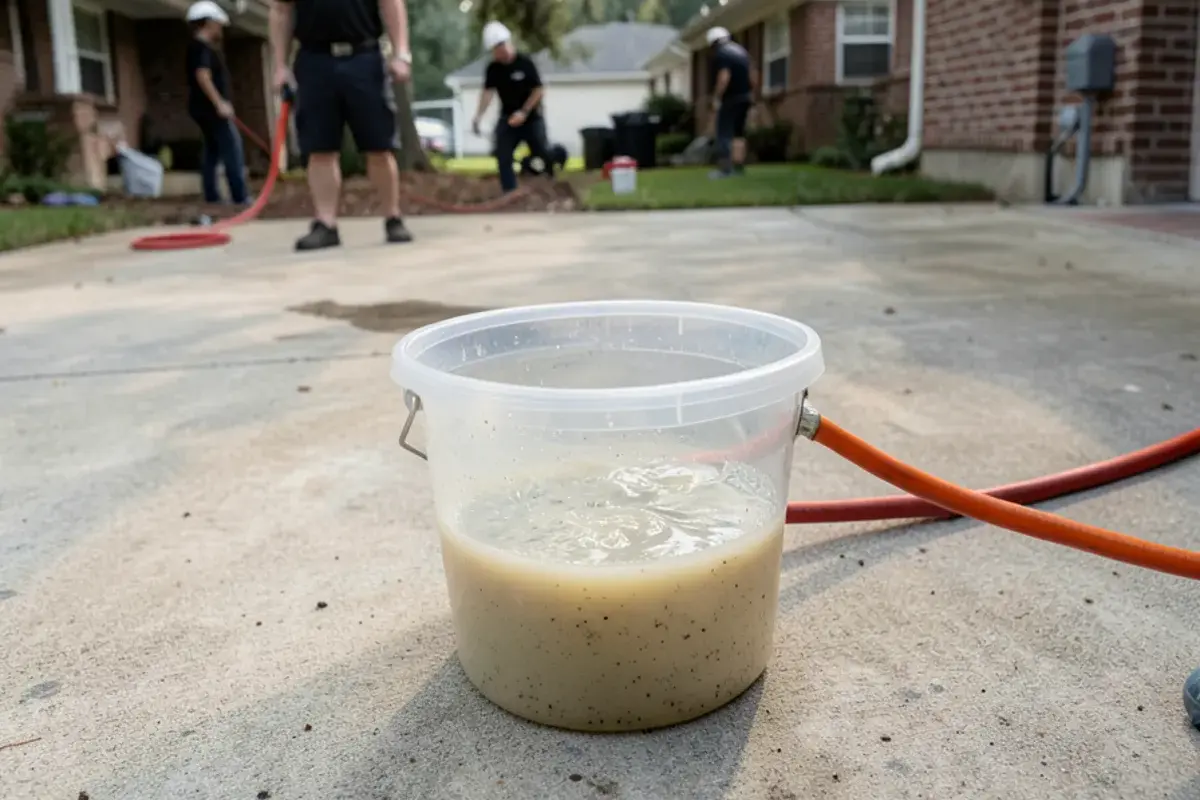
An electric element fired in an empty tank burns out in seconds, so refill fully before you turn the breaker back on.
If the drain valve clogs or drips
Sediment can stop the flow or hold the valve open once you close it. If flow stops, close the valve, take the hose off and let a plumber look before you poke at it, since a full tank of hot water sits behind that small opening. If it drips after closing, open and close it again to clear the seat, then thread a brass hose cap onto the outlet until the valve can be replaced. Older plastic drain valves deserve extra care, because they can crack when you force them.
When should you check the anode rod?
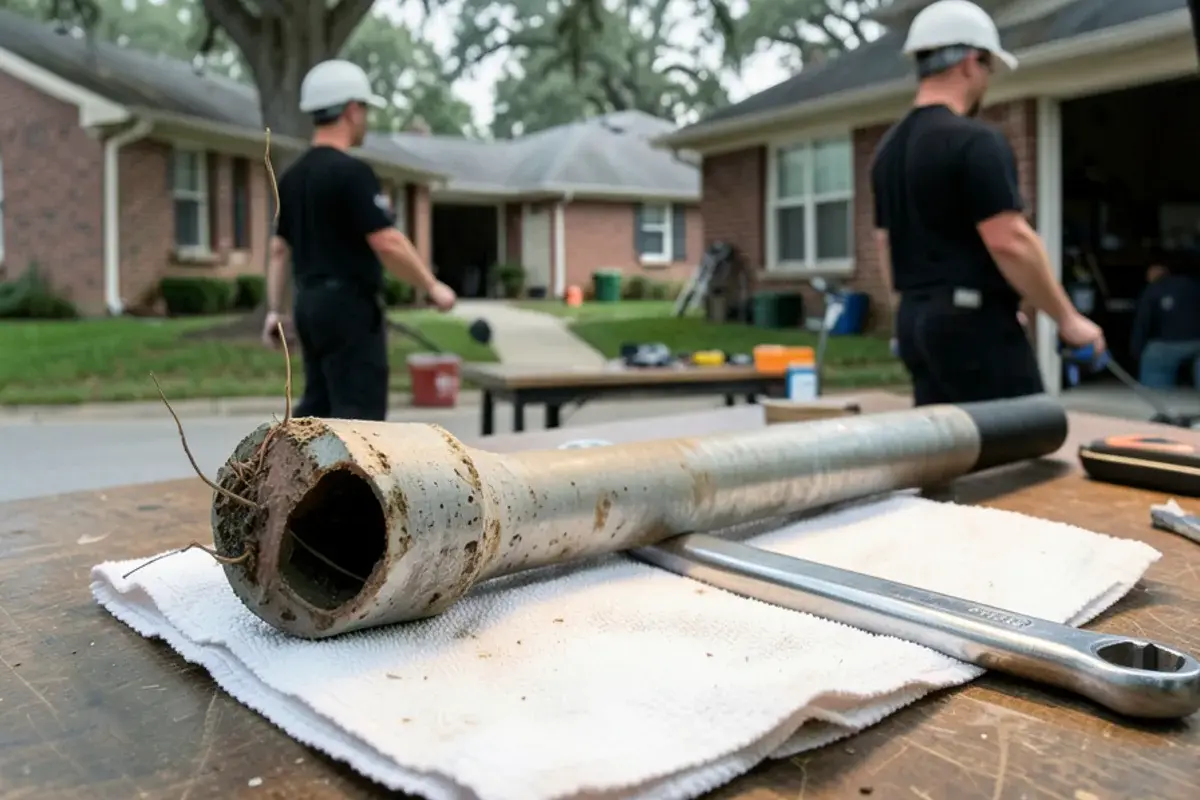
Check it every few years, sooner if your water is hard or softened. The anode is a sacrificial metal rod that corrodes in place of the steel tank. Once it is used up, the tank starts to take the damage.
This job needs a large socket, clearance above the heater and some muscle, since the rod may be seized. Many homeowners leave it to a plumber during a water heater repair visit. If the rod is mostly bare wire, replacing it costs little compared with a new tank.
Ask about rod type if your hot water smells like rotten eggs. That odor can come from a reaction between the anode and bacteria in the tank, and a different anode material may solve it. Never run a tank without a rod to cure a smell.
What should you check on a gas heater?
Check the vent and the flame, and keep the area clear. Look for these items:
- The flue pipe is connected, sloped upward and free of rust
- No scorch marks show near the top or the burner door
- The flame burns blue, with no heavy yellow tips
- Stored paint, gas cans and cleaners are far away
- The closet is free of lint and clutter
Carbon monoxide is the reason. Ready.gov says CO is colorless and odorless and can kill, and it advises tested alarms with battery backup. The CDC adds three points: put detectors near every sleeping area, replace them on the maker's schedule or every five years, and have fuel-burning water heaters serviced by a qualified technician every year. Smell gas? Get out, then phone 911 or the gas company.
What about tankless heaters?
Tankless units skip the flush and anode work, but they need their own care. Clean the inlet filter, and follow the maker's descaling schedule, which uses a pump and a cleaning solution through service valves. ENERGY STAR suggests choosing a contractor who can handle periodic maintenance, and that applies to tankless water heaters as much as to tanks.
Pacific Northwest National Laboratory's building guide explains why it matters. Scale in the heat exchanger cuts capacity and efficiency and can end in failure, so many makers recommend yearly cleaning with a mild acid such as vinegar. If your unit has isolation valves, the job is simple. If it has none, ask to have them added. Condensing models also have a condensate line and, in many cases, a neutralizer that needs its own check.
What does our team tell homeowners to watch?
Our team's advice is to pay attention to changes more than to age. A heater that suddenly rumbles, runs out of hot water sooner or gives rusty hot water is telling you something. Note the date on the unit and keep a one-line log of each year's work.
An attic heater raises the stakes, so pour a little water into the pan and confirm that it drains out where it should. A pan with a blocked line only delays the mess.
Plan replacement once you see moisture at the base seam. A tank that weeps from the body can't be repaired, and water in a closet or attic does more harm than the heater costs. Homeowners in Pasadena and South Houston can call us for a look, and a plan for water heater installation made before the failure is always easier than one made after it.
Common questions
How often should a water heater be flushed in Houston?
Once a year is the common guidance, and more often if your water is hard or the tank rumbles. Check the manual, since some makers set their own interval. If a tank has gone years without a flush, take care, because the drain valve can clog with sediment or fail to reseal once it has been opened.
Should I flush a very old water heater?
Think first. If a heater has never been flushed and is near the end of its service life, disturbed sediment can clog the drain valve or expose a weak spot. A plumber can help you decide. In many cases it makes more sense to inspect the tank and start planning for a replacement.
Will testing the relief valve make it leak?
Sometimes, and that is useful to know. An old valve can fail to reseat once it has been lifted, usually because of mineral buildup on the seat. Lift it once or twice more to flush the seat. If it keeps dripping into the discharge pipe, replace the valve. A failing safety valve found on a calm day beats one found during a real overpressure.
Rumbling tank or rusty hot water? Call and describe what it is doing.
- ★ 5.0 on Google, 18 reviews
- Sun–Thu 7 AM–8 PM · Fri 7 AM–6 PM · Sat closed
- Clear, upfront quote
Written by the PipeElectric team
PipeElectric is a Houston plumbing company with 18 Google reviews and a 5.0 rating. Read about us.
Sources
- U.S. Consumer Product Safety Commission Publication 5098: Avoiding Tap Water Scalds
- Wikipedia: Water heating
- ENERGY STAR: High Efficiency Gas Storage Water Heaters
- Ready.gov: Winter Weather
- CDC: About Carbon Monoxide Poisoning
- Pacific Northwest National Laboratory, Building America: Gas-Fired Tankless Water Heaters