
By the PipeElectric team · Published October 30, 2026 · Updated October 30, 2026
Why do my drains keep clogging? Usually because the last fix opened a hole through the blockage and left the buildup on the pipe wall. Hair, grease and soap then catch on what remains. If several drains slow down together, the cause is further down the line, and no amount of plunging at the sink will fix it.
Why do my drains keep clogging after they are cleared?
The clog was cleared, but the cause was not. A small cable or a plunger opens a channel through the blockage. The ring of grease, soap or scale stays on the pipe wall and catches the next thing that passes.
Repeat clogs on one fixture usually have one of four causes:
- A trap or branch line that has never been fully cleaned
- A habit, such as grease in the sink or wipes in the toilet
- Pipe with a rough or corroded inside wall
- A vent problem, or a line with too little slope
Clearing the same drain every month? Call and find out why.
- ★ 5.0 on Google, 18 reviews
- Sun–Thu 7 AM–8 PM · Fri 7 AM–6 PM · Sat closed
- Clear, upfront quote
One drain or all of them?
Count the affected fixtures first. This single check tells you more than anything else, and it costs nothing:
| What you notice | Likely location | What to do next |
|---|---|---|
| One sink is slow | Trap or short branch | Clean the trap, then the branch |
| Both bathroom fixtures are slow | Shared branch line | Have the branch cleared |
| Tub gurgles when the toilet flushes | Main line or venting | Call, and limit water use |
| Kitchen only, repeatedly | Grease in the kitchen line | Clean the full run |
| Every drain slows after rain | Main line or public sewer | Get it inspected, or report it |
| Sewage smell near a floor drain | Main line or a dry trap | Check right away |
If several fixtures back up at once, read our guide to sewage backing up into the house before you run more water.
What is actually blocking the pipe?
Each room has its own usual suspect.
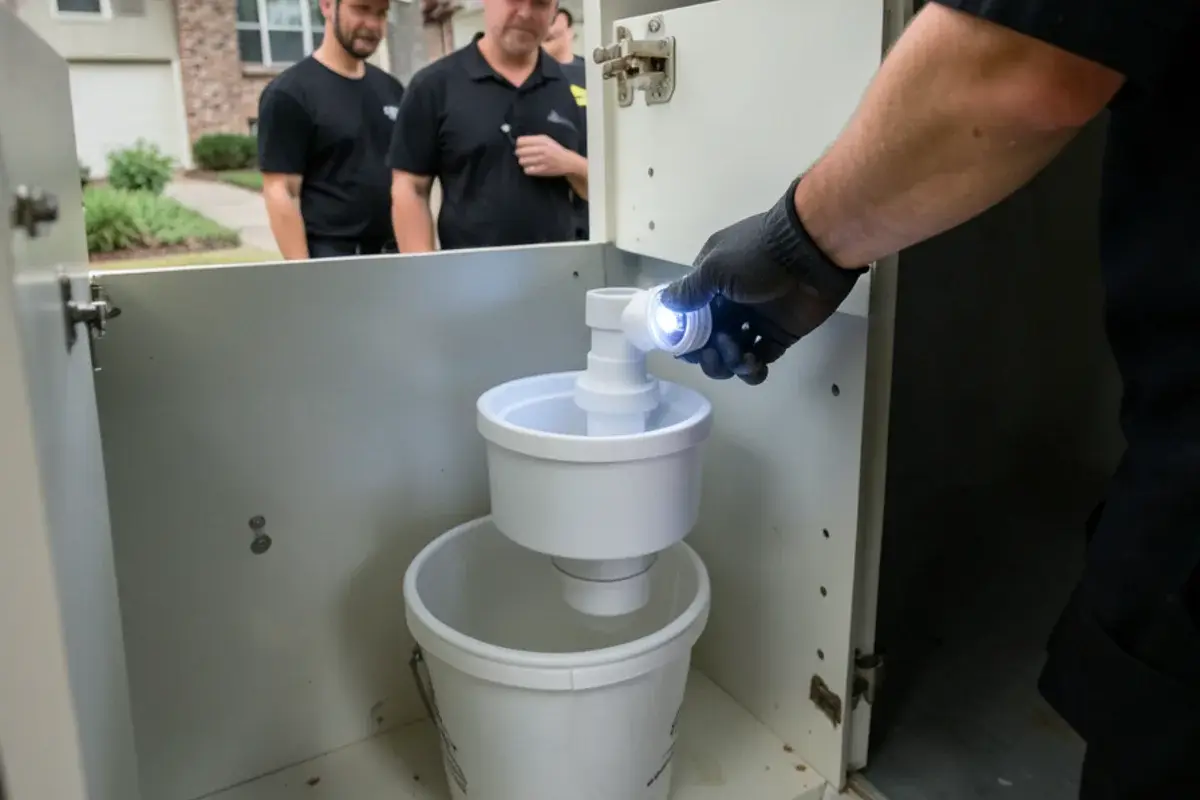
Bathroom sinks and tubs collect hair and soap film. The trap is a low point, so Wikipedia's plumbing trap entry notes it catches hair, sand, food waste and other debris.
Kitchen lines collect grease. Cooking fat poured down the drain with hot water congeals in cooler pipe. In public sewers, grease causes about half of blockage-related overflows in the U.S., according to Wikipedia's entry on sanitary sewer overflows.
Toilets and main lines collect paper and wipes. So-called flushable wipes do not break down the way toilet paper does, and they snag on rough spots in the pipe. Grease then binds them together.
Older lines add their own trouble. Cast iron can roughen on the inside as it ages, and roots can enter older sewer joints.
What does the clog itself tell you?
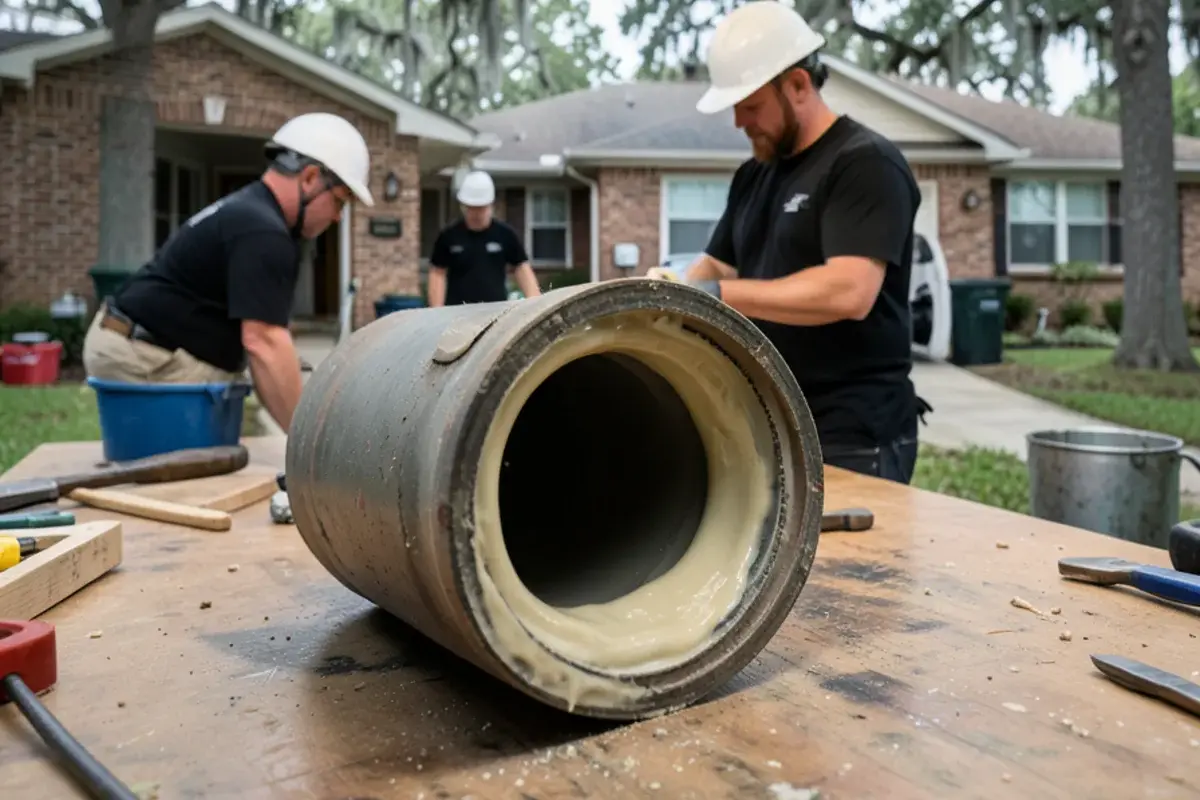
What comes out of the pipe is the best clue you will get. Ask to see whatever the trap or cable brings back:
| What comes out | What it points to | What to change |
|---|---|---|
| Hair and soap film | Normal bath buildup | A strainer, plus a full branch cleaning |
| White or gray waxy grease | Cooled kitchen fat | Clean the full run, and scrape pans first |
| Wipes or wads of paper | Flushed products, or a rough spot in the pipe | Bin the wipes, then camera the line if paper still catches |
| Fine roots | An open joint | Camera first, then a repair |
| Rust flakes or black scale | Aging cast iron | Camera before any hard cleaning |
| Sand or grit | A break letting soil in | Camera soon |
Are flushable wipes really safe to flush?
No, treat every wipe as trash. Wipes do not break down when flushed, and they catch on rough spots in a pipe, as Wikipedia's fatberg entry explains. Grease then binds them into a solid mass, the same process behind the huge blockages that make the news.
A house line has less room for error than a public main. One wipe may pass. A habit of them, in an older pipe with a rough wall or a slight sag, gives every later flush something to catch on. Keep a small bin beside the toilet and the problem goes away for free.
The flushable label has drawn regulators too. In 2015, the FTC alleged that one maker of flushable moist tissue lacked adequate support for its claims that the product was safe for sewer and septic systems, because its testing did not reflect real-world conditions after flushing.
Could the line under your slab have sagged?
Yes, and it is a common reason for a repeat clog that nothing seems to fix. Houston sits on clay soil, which swells when wet and shrinks when dry. When the ground moves, a buried drain can lose its slope or form a low spot, called a belly, where solids settle.
Cleaning a belly helps for a while, and then it fills again. A sewer camera inspection shows the problem, since the camera will pass through standing water at the low point.
Could a blocked vent be the real problem?
Yes, and no cable will find it. Every drain needs air behind the water, and that air comes through a vent pipe that runs up through the roof. If leaves, a nest or a dropped object block it, water drains in gulps and pulls air through the nearest trap. You hear that as a gurgle. It can also pull a trap dry, and sewer smell follows.
Watch for a sink that glugs after the tub drains, a toilet bowl that dips when another fixture runs, or slow drains with a clean camera run. Remodels can cause the same trouble when an island sink or a moved vanity goes in without proper venting.
What our team would try before booking a visit
Start with the simple, cheap fixes. Our team's general advice for a single slow drain:
- Pull the stopper and remove any hair by hand.
- Plunge with the overflow covered, using a cup plunger for sinks.
- Put a bucket under the trap, remove it and clean it, if the fittings are plastic and in good shape.
- Use a small hand auger for the next few feet.
- Run water and check for leaks at the joints.
Skip the chemical drain openers. They are harsh on skin and eyes, they often leave a pool of caustic water behind, and they make the next repair riskier for whoever opens the line. Tell a plumber if you have already used one.
When is it time for a plumber?
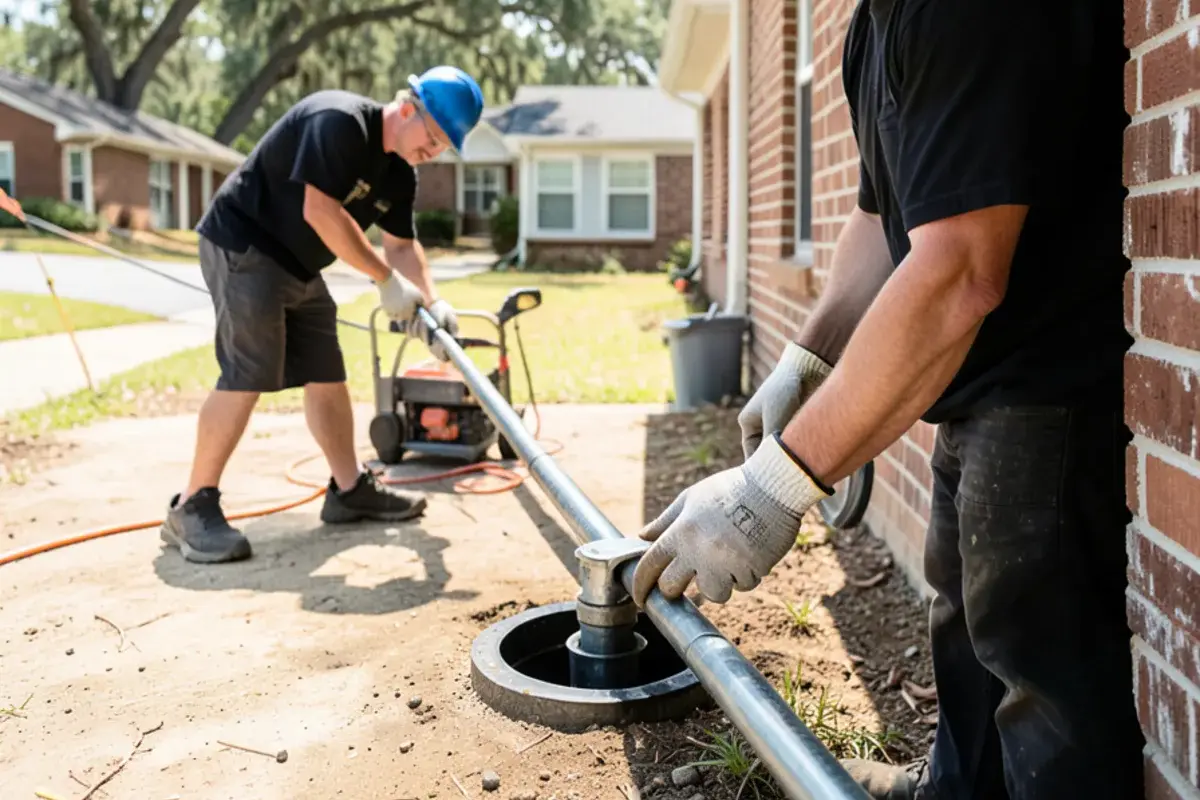
Call when simple steps fail, or when more than one drain is involved. A drain cleaning visit clears the line properly, and the method should match what is in it.
A cable is fine for a local clog. Hydro jetting uses high-pressure water to scour grease and scale from the pipe wall, which is why it suits repeat clogs. A camera comes first if the pipe might be cracked, because jetting a broken line can make it worse.
Bring a clog log if you can. Write down the date, the fixture and what had just run. Clogs on a steady cycle point to buildup, clogs after rain point to the main line or the public sewer, and clogs after laundry point to a line that cannot carry a large volume.
Stopping the next clog
Most repeat clogs end when the buildup is gone and the habit changes:
- Use a hair strainer in every tub and shower.
- Wipe pans before washing them.
- Put wipes in the trash, whatever the package says.
- Run the disposal with plenty of cold water, and go easy on fibrous scraps.
- Note how often a drain slows, and tell the plumber.
Homes in Pasadena and the rest of the Houston area face the same mix of clay soil, grease and aging pipe. When a drain keeps coming back, stop treating the symptom and find out what is underneath it.
Common questions
Does hot water keep grease moving down the drain?
Only for a short distance. Hot water can carry grease past the sink, but it cools and hardens further down, often where you cannot reach it. Wipe pans with a paper towel and put the waste in the trash. Running hot water after a greasy pan moves the problem and does not remove it.
Why does my kitchen sink keep clogging?
Grease is the usual cause. It coats the pipe in a long line past the trap, often under the slab, where a plunger or a short cable cannot reach. A kitchen run in a Houston home can be long, with few cleanouts, so buildup settles along the way. Clearing it properly means cleaning the full run to the main line.
How often should drains be professionally cleaned?
Only as often as the evidence says. A healthy line may never need it. If one drain slows on a regular cycle, note the interval, book a cleaning before the next backup, and ask for a camera run to learn why. An older Houston kitchen line with iron pipe may need a set schedule until the pipe is repaired.
Can a clogged vent make a drain slow?
Yes. A drain needs air behind the water, and a blocked roof vent starves it. The usual signs are gurgling, a toilet bowl that dips when another fixture runs, and slow drains even after a cable run comes back clean. Leaves and nests are common culprits. The fix happens on the roof, so call before climbing up.
Same drain, same clog, third time? Call and tell us how often it happens.
- ★ 5.0 on Google, 18 reviews
- Sun–Thu 7 AM–8 PM · Fri 7 AM–6 PM · Sat closed
- Clear, upfront quote
Written by the PipeElectric team
PipeElectric is a Houston plumbing company with 18 Google reviews and a 5.0 rating. Read about us.