
By the PipeElectric team · Published October 30, 2026 · Updated October 30, 2026
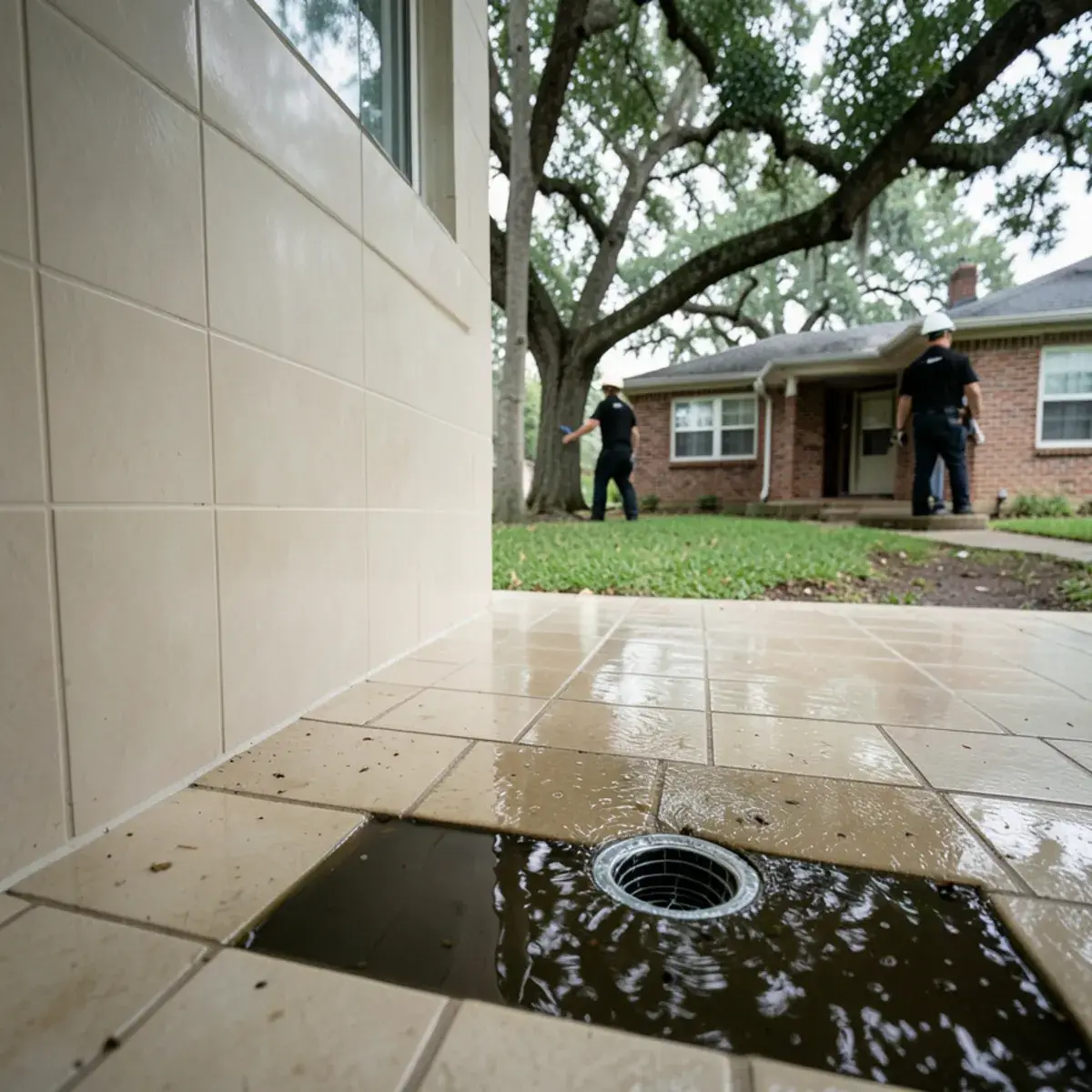
If you have sewage backing up, what to do first is simple: stop using every drain and fixture in the house. Keep children and pets out of the wet area, stay away from wet outlets, and do not flush to test anything. On a slab home it shows up at the lowest drains, usually a ground-floor shower or tub.
Sewage backing up: what to do in the first hour
Stop the water going in, then keep people away from what came out. This table covers the first hour:
| Do | Do not |
|---|---|
| Stop all sinks, toilets, the washer and the dishwasher | Flush to see if it clears |
| Move children and pets to another part of the house | Walk through it barefoot or in socks |
| Turn off a room's breaker if you can reach the panel on dry ground | Touch wet outlets, cords or appliances |
| Open windows if that is safe | Run the central air if it may spread odor or contaminated air |
| Take photos and video before cleanup | Pour drain chemicals into a blocked line |
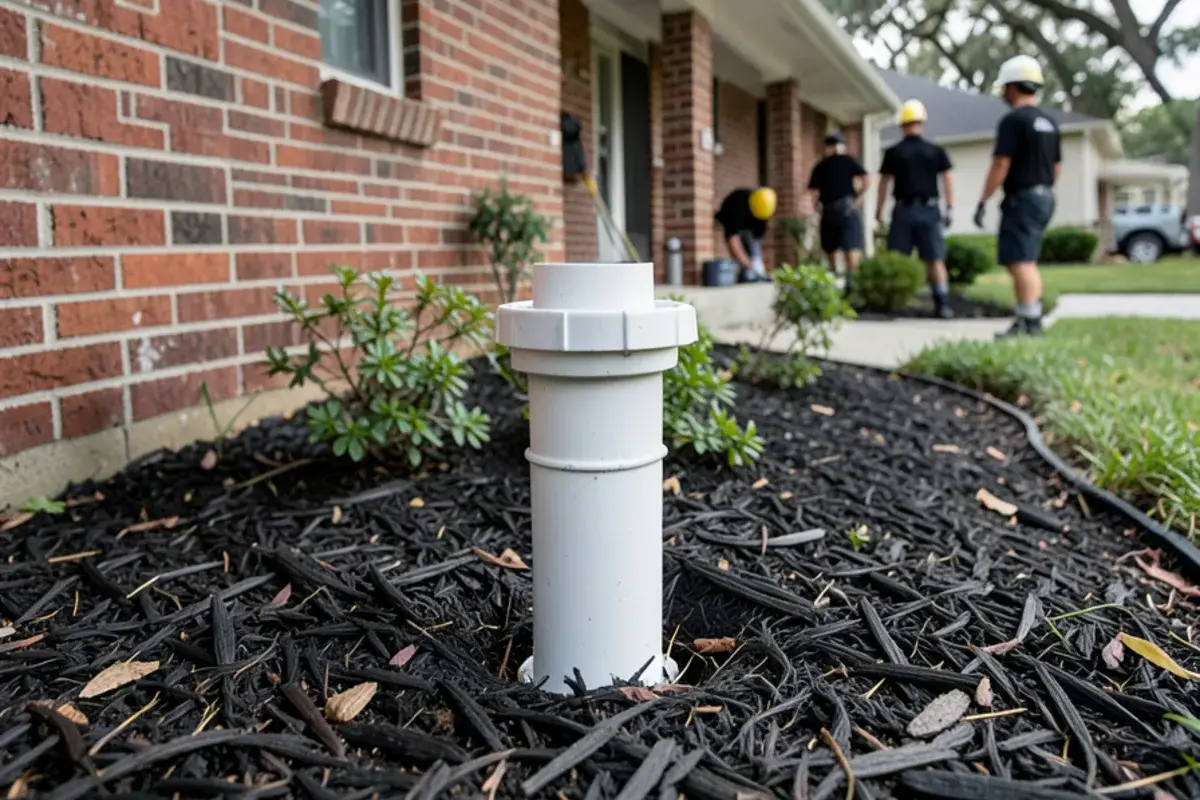
| Leave the outdoor cleanout cap on | Open it under pressure without a plumber |
If the odor could be natural gas, leave at once, then phone 911 and the gas utility from the yard. Gas comes before sewage every time.
Sewage on the floor? Stop every drain, then call.
- ★ 5.0 on Google, 18 reviews
- Sun–Thu 7 AM–8 PM · Fri 7 AM–6 PM · Sat closed
- Clear, upfront quote
Is the blockage in your line or the city's?
A quick check of what backed up usually narrows it down. One fixture points to a local clog. Several fixtures at once, especially the lowest ones, point to the main sewer line.
- Only one sink or toilet: a clog in that branch
- Tub fills when the toilet flushes: a blockage in the main line on your property
- Neighbors have the same problem: possibly the public sewer
- It started during heavy rain: possibly an overloaded public system
About a quarter of U.S. sewer overflows happen during heavy rain, when stormwater gets into sanitary lines and exceeds their capacity, according to Wikipedia's overview of sanitary sewer overflows. The EPA notes that these overflows can back up into homes.
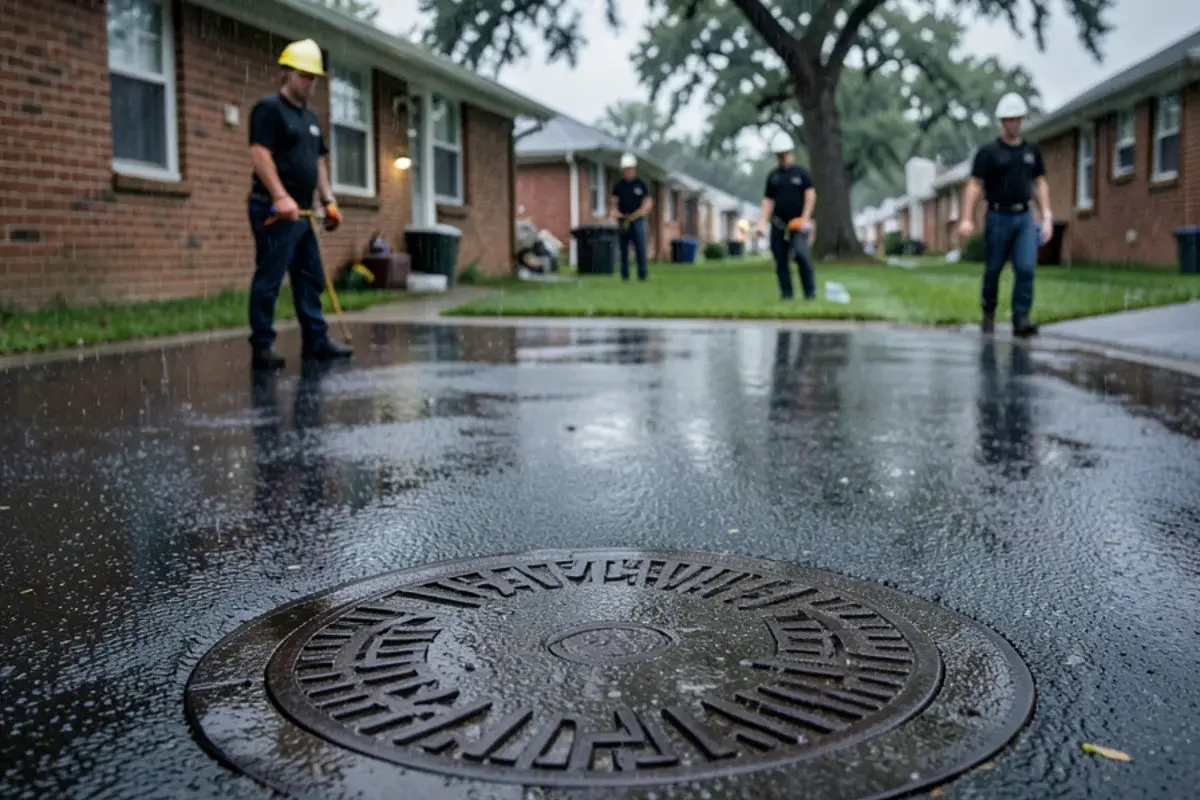
Houston's own record shows why this question comes first. EPA's summary of its settlement with the city lists more than 4,000 sanitary sewer overflows over five years, caused by blockages, too little capacity and system failures. Some of that sewage backed up into streets and homes. The city runs more than 6,100 miles of sewer pipe, so a public main can fail with nothing wrong at your house.
Report a suspected public line problem right away. In Houston, call 311. West University Place and Bellaire are separate cities, so call that city's public works department. The owner usually handles the service line from the house to the public connection, and the utility can tell you exactly where its side begins.
What a plumber learns at the cleanout
A plumber opens the cleanout slowly and from the side, because a full line can push sewage out under pressure. What sits inside shows where the block is:
- Cleanout full of standing sewage: the block is downstream, toward the street.
- Cleanout empty while the house backs up: the block is between the cleanout and the house.
- Line runs clear and neighbors are affected: ask the utility to check its main.
Some homes have no outdoor cleanout at all. The work then starts from a toilet flange or a roof vent, which takes longer, and that is a good reason to talk about adding one.
Why does sewage come up in the shower first?
Gravity decides it. Sewage rises until it finds the lowest opening on the blocked side of the line, and on a slab home that is a ground-floor shower, tub or floor drain. A shower pan sits lower than a toilet rim, so it fills first. In a two-story house, the upstairs bath stays dry while the downstairs shower fills.
The pattern is useful. If an upstairs flush makes a downstairs shower rise, the branch lines are probably fine, and the trouble sits past the point where they join. A washing machine is a common trigger, since it dumps a large volume fast. Note what was running when the water came up, because that helps a plumber place the block before the cable goes in.
How dangerous is sewage in the house?
Treat all of it as contaminated. The EPA warns that sewer overflows into homes threaten public health, and Ready.gov advises that people with asthma, lung conditions or weakened immune systems stay out of buildings with indoor water leaks or mold. Children should not help with cleanup.
Wash your hands with soap and water after any contact, as the CDC advises after flooding. Keep cuts and scrapes covered. If you get a wound that may be contaminated, check when you last had a tetanus shot and talk to a doctor.
Who cleans up after a sewer backup?
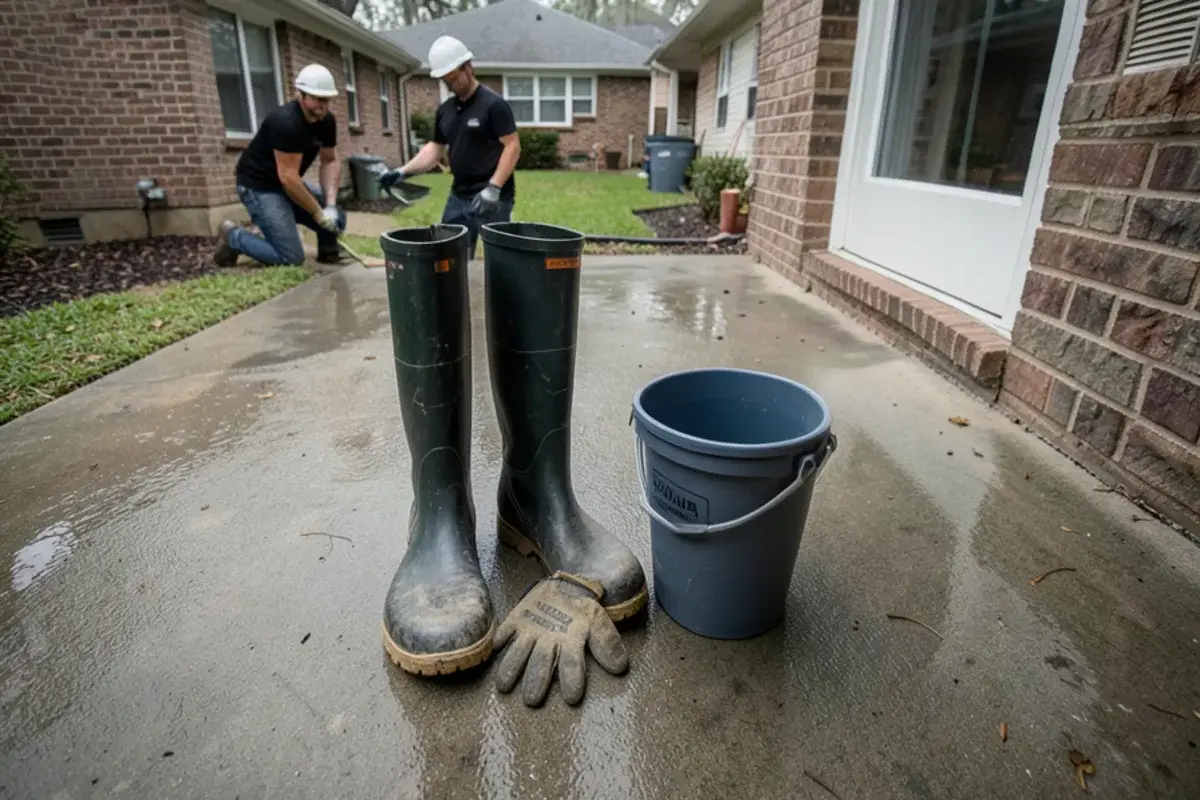
Hire experienced help for anything beyond a small, hard-floor spill. The EPA says that when water comes from sewage, you should call in a professional with experience cleaning buildings damaged by contaminated water.
For a small spill on tile or concrete, the CDC's flood guidance is a fair guide:
- Wear rubber boots and gloves.
- Remove the water and solids.
- Clean hard surfaces with soap and water.
- Disinfect with 1 cup of bleach to 1 gallon of water.
- Throw out what cannot be disinfected, such as rugs and wet drywall.
- Dry the room with fans or a dehumidifier.
Never mix bleach with ammonia or other cleaners. Call your insurer before you throw much away, because a sewer backup is often treated differently from other water damage. Our post on whether homeowners insurance covers sewer backups explains why.
What can be saved, and what has to go?
Porous items soaked by sewage go in the trash, while hard, sealed surfaces can usually be cleaned. Use this as a guide, and check with your insurer before you discard anything of value:
| Item | Usual outcome | Why |
|---|---|---|
| Carpet and pad | Discard | The pad holds sewage and cannot be disinfected |
| Drywall and wall insulation | Cut out above the wet line | Both wick water upward behind the paint |
| Baseboards and pressed-wood vanities | Usually discard | Pressed wood swells and holds contamination |
| Tile and sealed concrete | Clean and disinfect | Hard surfaces come clean, though grout needs a close look |
| Mattresses and upholstered furniture | Discard | They cannot be cleaned all the way through |
| Solid wood and metal furniture | Clean, disinfect, dry | Sealed surfaces can often be saved |
On a slab, check under laminate and vinyl plank. Water can sit on the concrete below them and stay hidden long after the floor looks dry.
What our team looks at before the drains go back in service
Clearing the line is only half the job. Our team's general advice is to find out why it blocked before you trust it again.
- Run a sewer camera inspection after the line opens, so you can see roots, grease or a broken section.
- Note the cleanout location, or have one added if the house has none.
- Ask whether the line needs sewer line cleaning or a repair.
- Ask about a backwater valve, which Triple-I describes as letting sewage out but not back in.
Run water slowly at first, one fixture at a time, and watch the lowest drains.
What if the backup happens when the phones are closed?
You can still protect the house. Phones run 7 AM-8 PM Sunday through Thursday and 7 AM-6 PM on Friday. Saturday is closed.
Outside those hours:
- Keep every fixture off, and use a neighbor's bathroom if you need one.
- Report any suspected public line problem through the city or utility.
- Keep the area closed off and ventilated.
- Save your photos and receipts for the claim.
- Call when the phones open and describe what backed up and when.
A backed-up house needs fast action, but the first steps belong to you and cost nothing. Stop the water, keep people clear, and find out whose line it is. Our emergency sewer backup page covers what a plumber does next. When the phones open, call and tell us which fixture went first and what was running.
Common questions
Can I flush the toilet if only the shower is backing up?
No. A shower that fills when something else drains usually means the blockage sits past the point where those fixtures join. Every flush then pushes more waste toward the lowest opening in the house. Hold off on all water use, including the washer and dishwasher, until the line has been cleared and tested.
Why does the smell seem worse than the amount of water?
Sewer gas can escape through a floor drain or a trap that has been pushed dry, so the odor can run ahead of the water. Open windows if you can do so safely. If the smell is like rotten eggs and you cannot tell it from natural gas, treat it as gas: leave and call from outside.
How do I know when it is safe to use my drains again?
Wait until a plumber has cleared the line and run water through it under watch. A common test is to fill a tub and sink, drain them together, then flush each toilet while someone checks the lowest shower. If nothing rises, start with small loads. Save the washer for last, because its discharge is the heaviest single test of the line.
Will sewage back up again after the line is cleared?
It can, if the cause stays in the ground. Clearing opens a path, but roots, a sag from clay movement or a cracked joint will collect waste again. That is why a camera run after clearing matters. Ask to see where the trouble sits, measured from the cleanout, and decide on any repair from that footage.
Drains backing up with nothing running? Call and tell us which fixture went first.
- ★ 5.0 on Google, 18 reviews
- Sun–Thu 7 AM–8 PM · Fri 7 AM–6 PM · Sat closed
- Clear, upfront quote
Written by the PipeElectric team
PipeElectric is a Houston plumbing company with 18 Google reviews and a 5.0 rating. Read about us.