
By the PipeElectric team · Published October 30, 2026 · Updated October 30, 2026
What to do when a pipe bursts comes down to one move: close the main shut-off valve now, before you call anyone. Then shut down the water heater, keep clear of wet outlets, and photograph the damage. All of it fits inside ten minutes, and the order below keeps you safe while it happens.
What to do when a pipe bursts, minute by minute
Gas comes first. If you smell gas at any point, stop everything, leave the house, and call 911 and CenterPoint Energy's emergency line from outside. Natural gas that collects indoors can reach an explosive level, and open flames and electrical equipment can ignite it.
With no gas smell, work through this order:
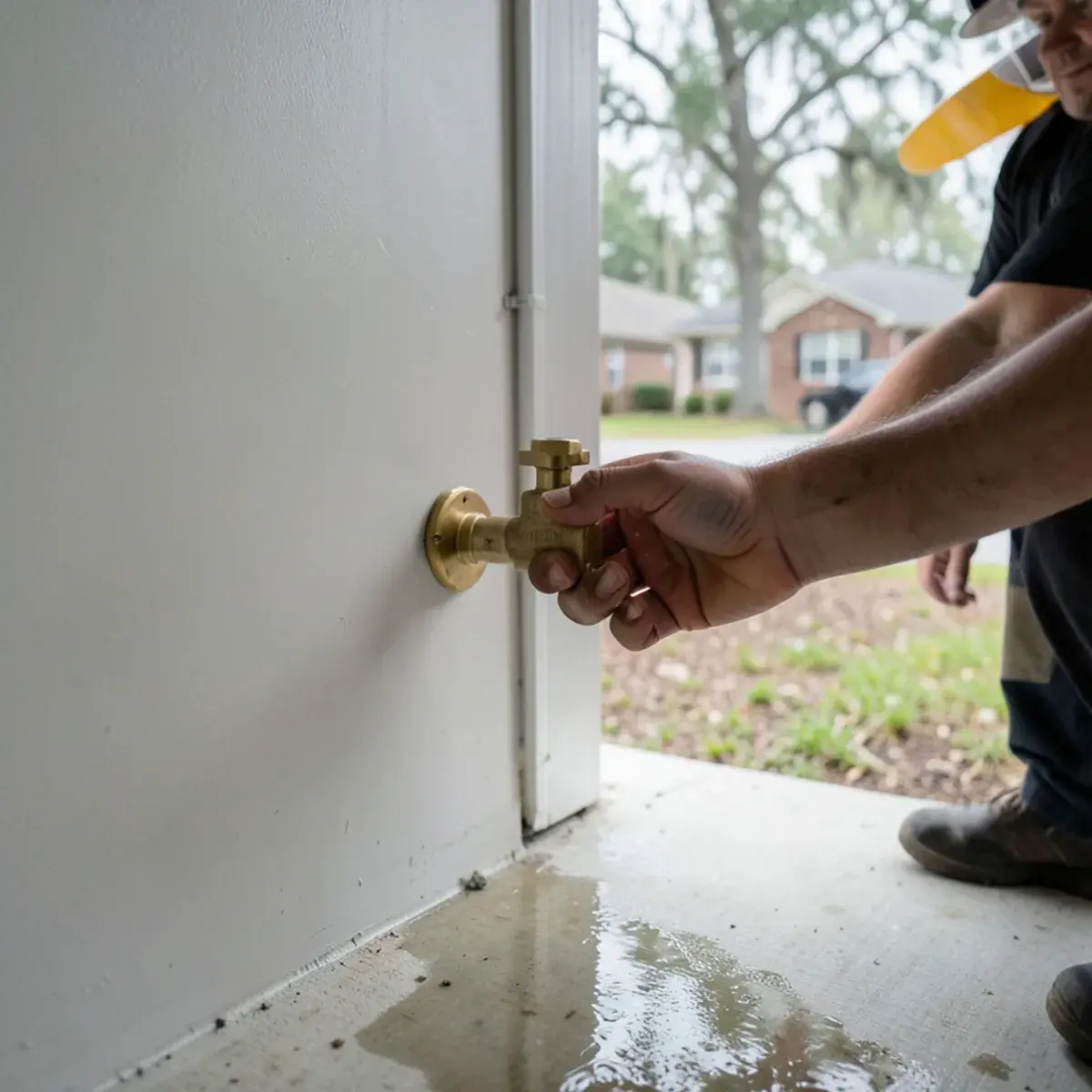
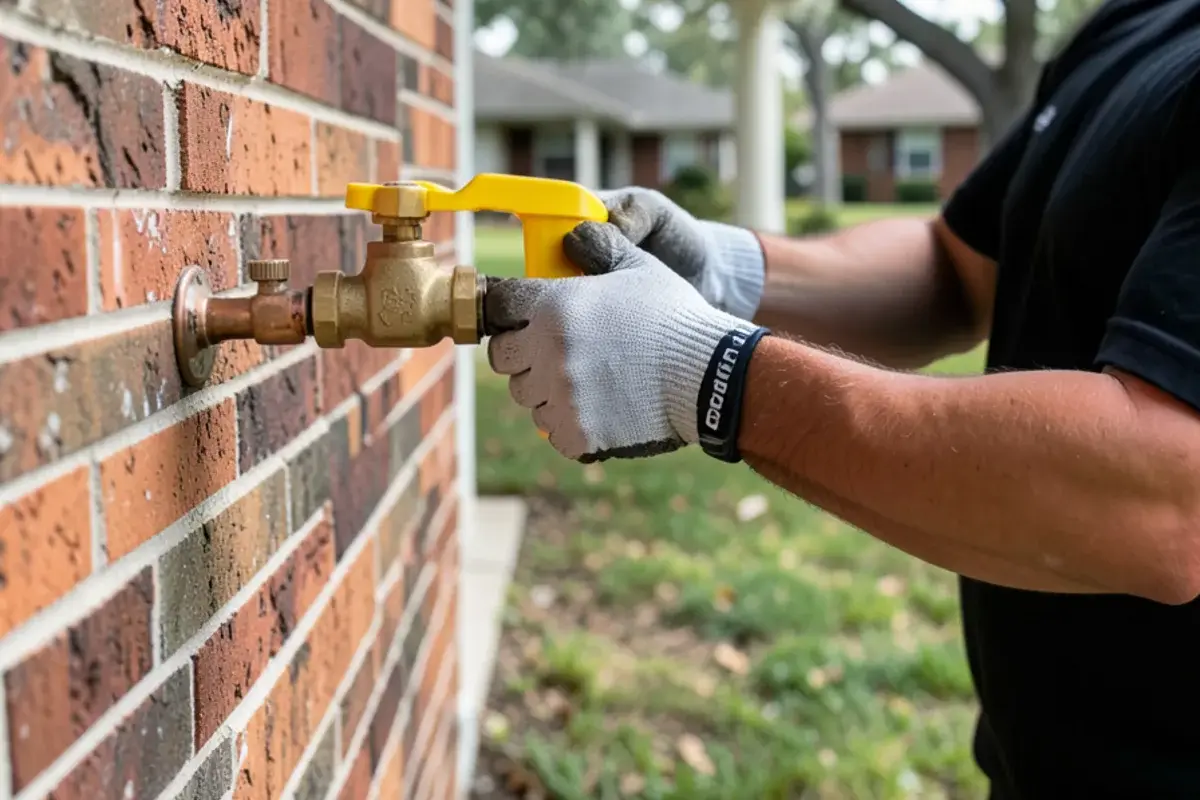
- Minute 0-2: Close the main shut-off valve. Turn a round handle clockwise until it stops. Turn a lever a quarter turn, so it sits across the pipe.
- Minute 2-3: Stay clear of wet electrics. Do not touch outlets, cords or appliances while standing in water. Switch off that room's breaker if the path to the panel stays dry.
- Minute 3-4: Shut down the water heater. Set a gas control to off or pilot. Turn off the breaker for an electric unit.
- Minute 4-5: Drain the lines. Open a tub spout and the lowest cold faucet in the house. That empties what is left in the pipe and takes pressure off the break.
- Minute 5-7: Move what you can. Pull rugs, lift furniture legs onto foil or wood blocks, and set buckets under drips.
- Minute 7-9: Record it. Take video of the break, then the wet rooms, before cleanup starts.
- Minute 9-10: Call. Say where the water came from, what you shut off, and whether the meter has stopped.
Water still running? Close the main valve first, then call.
- ★ 5.0 on Google, 18 reviews
- Sun–Thu 7 AM–8 PM · Fri 7 AM–6 PM · Sat closed
- Clear, upfront quote
Can't find the main shut-off valve?
Check the street-facing side of the house first. Most homes have the valve in one of a few spots, and a slab house has no basement to hide it in.
| Where to look | What you will see | What to do |
|---|---|---|
| Outside wall near a hose bib | A valve on a pipe rising from the ground | Turn it by hand |
| Garage wall | A valve on a pipe near the water heater | Check that it feeds the house and not only the heater |
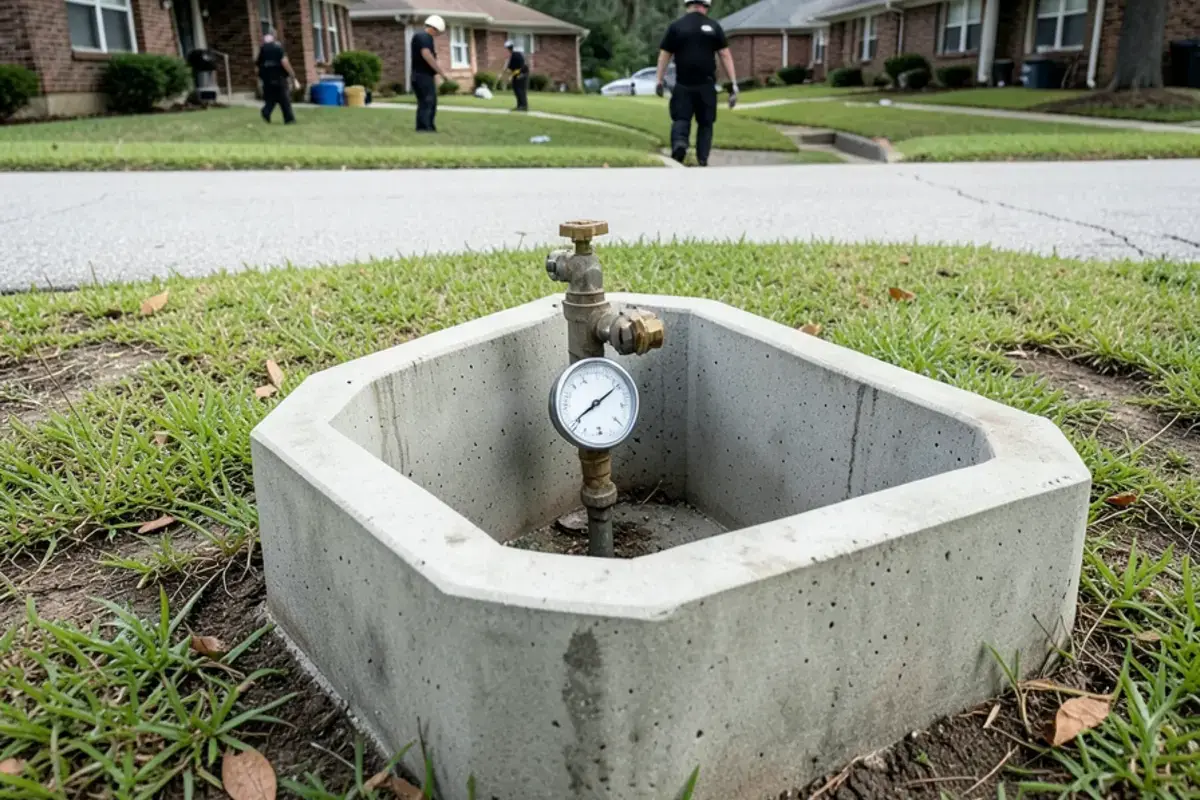
| Curb meter box | A concrete or plastic lid in the lawn | Lift the lid and look for a house-side valve |
| Water heater cold inlet | A valve on the top of the tank | Closes the heater only, so keep looking |
Do not force a valve that will not move. Old gate valves can snap, which makes a bad hour worse. The valve on the street side of the meter usually belongs to the water utility, so call the utility if nothing else stops the flow. In Houston that means 311. In Bellaire or West University Place, each a separate city, call that city's public works line.
What can wait until the water is off?
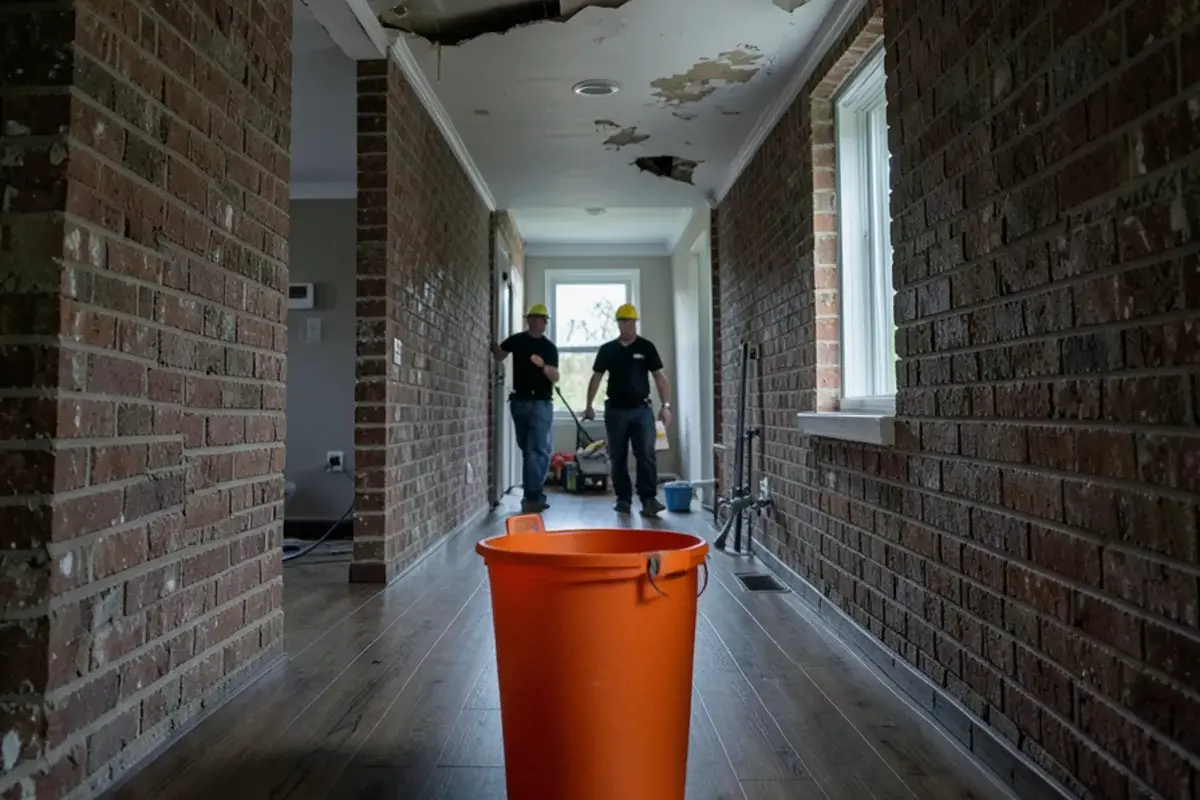
Almost everything else can wait a few minutes, but drying cannot wait long. The EPA gives you a window of 24 to 48 hours to dry water-damaged areas before mold can take hold. Run fans, mop standing water, and pull wet rugs out to dry.
Stay out from under a ceiling that bulges or sags. Water can sit above the drywall, and the weight can bring it down.
Call your insurer the same day, and keep every receipt. Triple-I says standard homeowners and renters insurance covers burst pipes, though a sample HO-3 policy leaves out the system the water escaped from. Expect the water damage and the pipe repair to be treated differently, and check your own policy.
How do you confirm the water is really off?
Read the water meter, because a closed valve can still pass water. Old gate valves wear at the seat, so the handle stops turning while a stream keeps running behind it. Lift the meter box lid and watch the dial for a full minute. Most meters have a small leak indicator, often a triangle or star, that spins at the slightest flow.
- Dial still: the valve is holding, and the house side is dead.
- Dial creeping: the valve is passing a little water. Close the house-side valve at the meter box if there is one.
- Dial spinning: the valve is open, or the split is on the run from the meter to the wall.
That last result changes the job. A break on the yard side of your shut-off keeps running whatever you do at the house, so look for soggy ground or a bubbling patch along the line. Call the utility if you cannot stop it at the meter.
Where the water shows up tells you what comes next
The wet spot is your first clue to the repair. This table covers the usual patterns:
| Where you see water | Likely break | What the repair usually involves |
|---|---|---|
| Ceiling or top of a wall | Attic or second-floor supply line | Opening drywall, then drying the insulation above it |
| Behind a sink or toilet | Shut-off valve or flex connector | Often a quick swap, since the part sits at the surface |
| Garage or outside wall | Line in an unheated wall | Opening the wall near the split |
| Floor, warm or wet | Line under the slab | Locating the break before anyone cuts concrete |
| Yard near the meter | Service line to the house | Marking utilities through 811, then digging to the break |
Water travels along framing and can appear several feet from the split. A stain in the hallway may start over the bathroom, so photograph the spot and note what sits above it.
Why do pipes burst in Houston if it rarely freezes?
Pipes here fail for more reasons than cold. Freezes are rare but severe: during Winter Storm Uri in February 2021, plumbing burst in buildings across Texas and water service was disrupted for more than 12 million people.
The rest of the year, the likely causes are slower:
- Worn fittings on supply lines to sinks, toilets and appliances
- Older pipe that has thinned from the inside
- Clay soil moving lines under and around the slab
- A hose or flex connector that has aged out
The Connecticut Insurance Department cites an Institute for Business & Home Safety study that blamed a burst supply line for half of the water damage incidents involving washing machines. Triple-I suggests a yearly hose check, with new hoses every five to seven years. If water is coming up through the floor, the break may be under the foundation, and that calls for slab leak repair, which starts with locating the break.
What our team tells homeowners to practice now
Find your main shut-off valve this week, while the house is dry. Our team's general advice is simple, and it costs nothing:
- Turn the valve fully closed and open it again, so you know it moves.
- Tag it, and show everyone in the house where it is.
- Keep a flashlight and a pair of work gloves nearby.
- Label the breaker for the water heater.
A valve that has sat for years can seize, and a ten-minute drill today beats learning that with water on the floor. If yours sticks, have it replaced before you need it.
How do you turn the water back on after a repair?
Bring the pressure back slowly, because a sudden surge can loosen a fresh joint or an old fitting. Work in this order:
- Close every faucet you opened, except one at the far end of the house.
- Open the main valve a little, then stop and listen for hissing or spraying.
- Let the open faucet spit air until the flow is steady, then close it.
- Check the repair, the ceiling and the meter before you open the valve fully.
- Run a hot tap until it stops sputtering, so you know the tank is full.
- Turn the gas control or the breaker back on.
Expect cloudy or rust-colored water for a minute or two, since the surge stirs up scale. Unscrew and rinse the faucet aerators if the pressure seems low afterward.
When can a plumber take over?
A plumber takes over once the water is off and you know what failed. PipeElectric's phones are open Sunday to Thursday from 7 AM to 8 PM and Friday from 7 AM to 6 PM. Saturday is closed.
Outside those hours, keep the main valve closed, keep drying, and call when the phones open. Do not reopen the valve to test the pipe. If water still cannot be stopped, use the utility's emergency line.
Our burst pipe repair page explains what comes next, and emergency leak repair covers leaks that are not a full break. Either way, you get a clear, upfront quote once the job has been looked at.
Common questions
Should I turn off the water heater after a pipe bursts?
Yes, once the main valve is closed. With the supply off, a tank can lose water through open faucets, and an electric element can burn out if it runs dry. Set a gas unit's control to off or pilot, or switch off the breaker for an electric unit. Restart it only after the lines are repaired and the tank is full.
Can I wrap a burst pipe with tape until a plumber comes?
Tape or a repair clamp can slow a pinhole in an exposed pipe, but it will not hold on a split under full pressure. Keep the main valve closed and use tape only as a backup. If you need water for a few hours, a clamp on a small leak may let you reopen the valve briefly, but watch it the whole time.
Why is water still coming out after I shut off the main valve?
Some flow is normal for a few minutes, because the pipes above the break are still draining. Open a tub spout and the lowest cold faucet to speed it up. If water keeps coming after that, the valve may be passing, so check the meter dial at the curb. A moving dial means the valve is not holding, and the utility may need to shut off service.
Can I flush the toilet with the main water off?
Yes, once per toilet, as long as the break is on a supply line and not a drain. Each tank still holds one flush. After that, pour a bucket of water into the bowl to push it through. Drains work by gravity, so they keep working with the supply closed. Skip this if sewage or dirty water is part of the problem.
Main valve closed and the floor still wet? Call and tell us which pipe let go.
- ★ 5.0 on Google, 18 reviews
- Sun–Thu 7 AM–8 PM · Fri 7 AM–6 PM · Sat closed
- Clear, upfront quote
Written by the PipeElectric team
PipeElectric is a Houston plumbing company with 18 Google reviews and a 5.0 rating. Read about us.
Sources
- Wikipedia: Gas leak
- Ready.gov: Floods
- EPA: A Brief Guide to Mold, Moisture and Your Home
- Triple-I: How to protect your home from water damage
- Triple-I: Sample HO-3 policy form (HO 00 03 10 00)
- Wikipedia: 2021 Texas power crisis
- Connecticut Insurance Department: Quick tips to prevent water damage (IBHS study)