
By the PipeElectric team · Published October 30, 2026 · Updated October 30, 2026
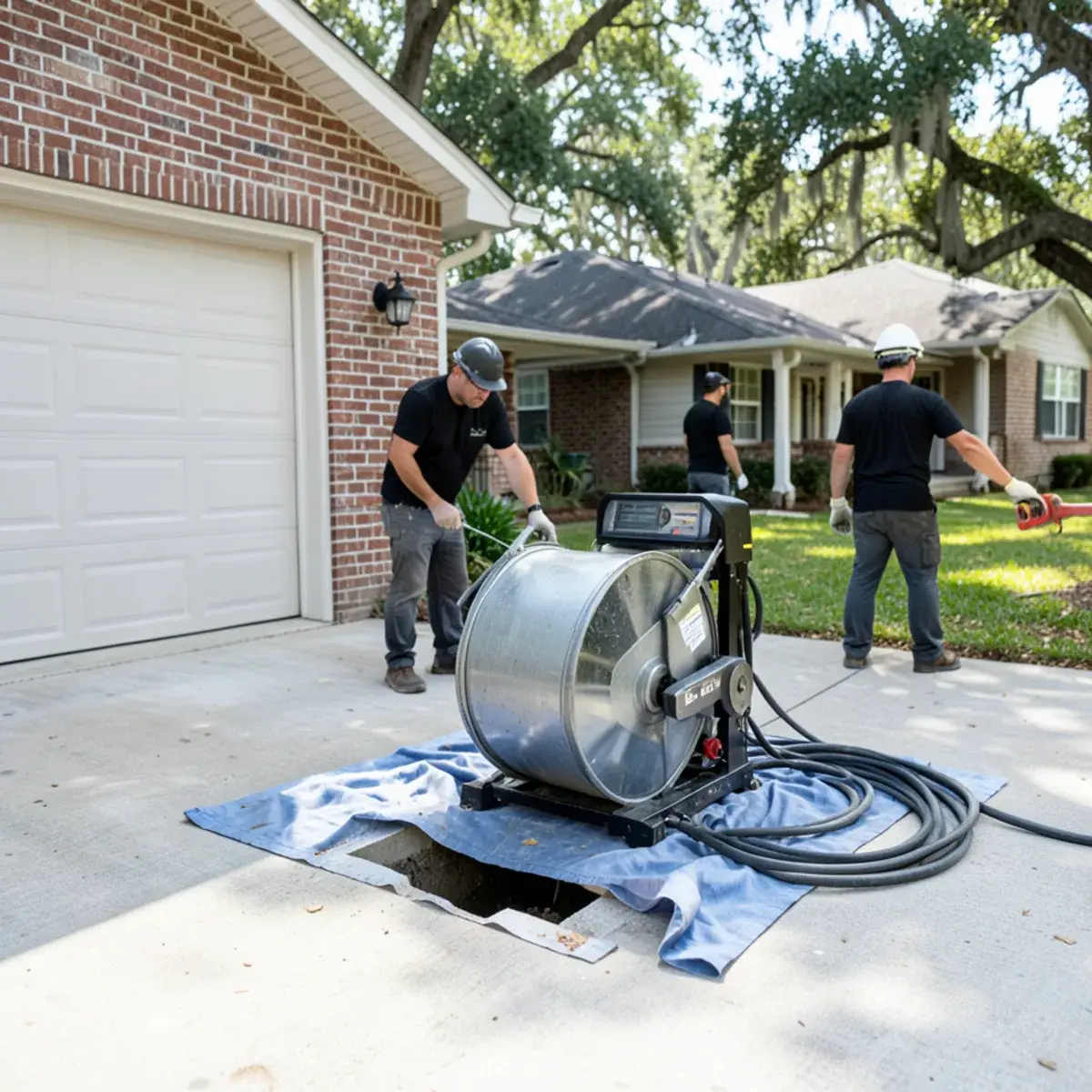
In snaking vs hydro jetting, a snake is the right first move for a single clog, and jetting is the better tool for repeat clogs caused by grease, scale or roots along the line. Older pipe changes the order. If the drain is clay, thin cast iron or unknown, a sewer camera goes in first.
Which does your drain need?
Your symptom points to the tool. Start with this table:
| Symptom | Likely cause | Best first move |
|---|---|---|
| One slow sink, first time | Hair, soap or food at the trap | Snake |
| Toilet blocked | Clog in the bowl's trap | Closet auger |
| Kitchen drain clogs every few months | Grease on the pipe wall | Camera, then hydro jetting |
| Several fixtures back up together | Main line blockage | Clear it, then camera |
| Main line clogs after every big rain | Roots, or a cracked pipe | Camera, then snake or repair |
| Sewer odor with slow drains in an old home | Damaged pipe | Camera before any cleaning |
Two patterns matter most: how many fixtures are involved and how often it comes back. One fixture points to a local clog. Repeats suggest something in the pipe that a clog keeps forming around.
Here is how the two tools compare on the points that decide most jobs:
| Point | Drain snake | Hydro jetting |
|---|---|---|
| What it does | Opens a path through the clog | Scrubs the full pipe wall |
| Best on | Hair, paper, soft blockages, objects | Grease, scale, sludge, fine roots |
| Needs | An opening at the drain or a cleanout | A cleanout, a water source and a line that can drain |
| Main risk | Unskilled use can damage plastic or copper | Pressure can damage old or weak pipe |
| Typical result | Flow returns, buildup stays | Pipe wall comes back close to clean |
Backing up in more than one fixture? Stop running water and call.
- ★ 5.0 on Google, 18 reviews
- Sun–Thu 7 AM–8 PM · Fri 7 AM–6 PM · Sat closed
- Clear, upfront quote
What does a drain snake actually do?
A drain snake opens a path through a clog. The tool is a flexible coil turned by a crank or motor as it moves down the pipe. According to Wikipedia's entry on the tool, it can break up shreddable material like roots, snag small objects to pull them out, and scrape some deposits as the cable flails against the wall.
The right size matters:
- Hand auger: for sinks and tubs
- Closet auger: for toilets, with a boot that protects the porcelain
- Drum machine: for larger lines, with blades that can cut roots
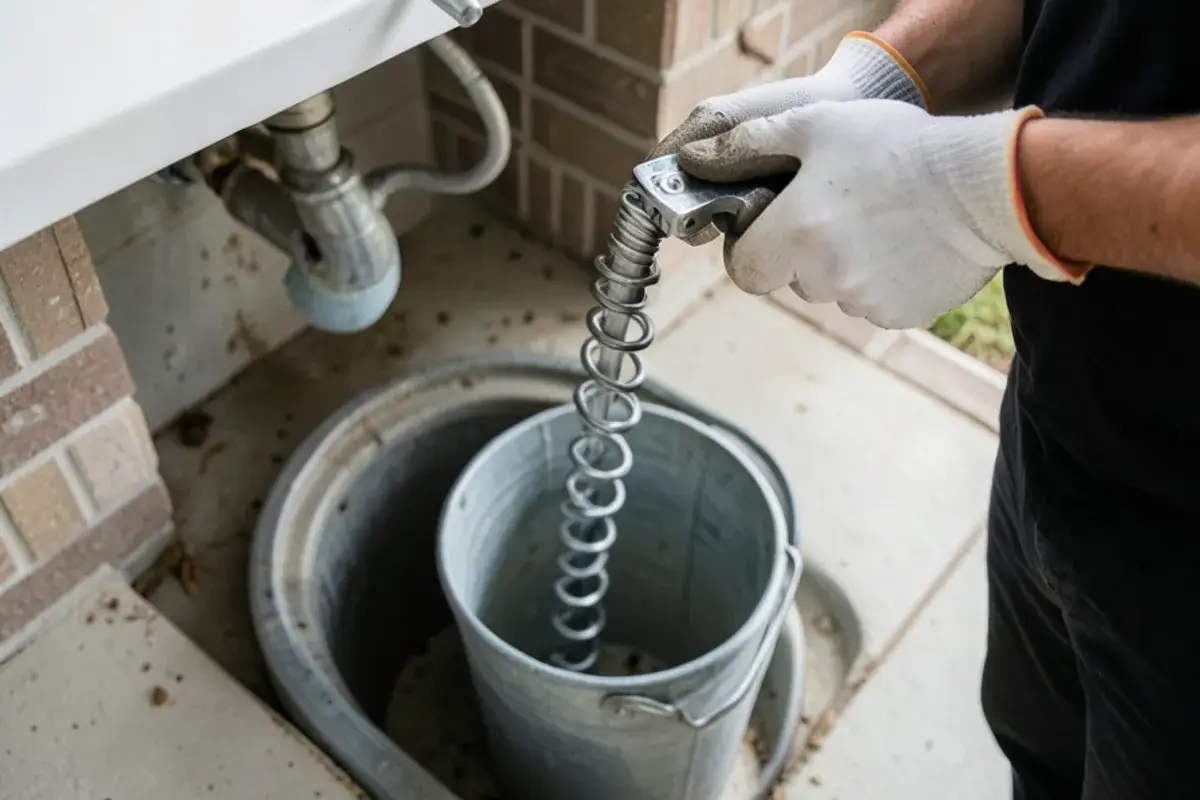
The limit is what stays behind. A cable leaves a hole roughly the width of its head. Grease and scale on the rest of the pipe wall remain, so the next clog has something to grab. That makes a snake a good one-time fix and a weak long-term one for buildup.
What can hydro jetting do that a snake cannot?
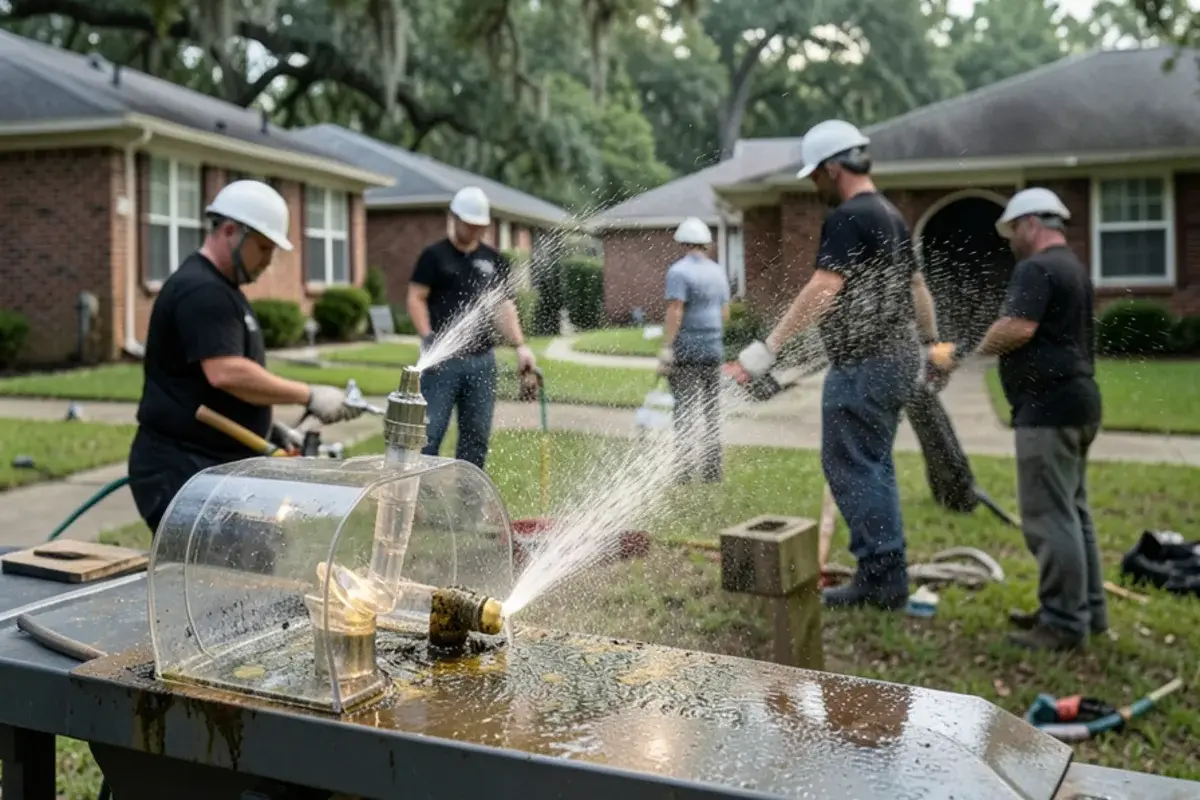
Hydro jetting cleans the pipe wall as well as the blockage. A plumber sends a hose with a high-pressure nozzle through the line, and the water strips debris along the full length. Bob Vila's guide gives a range of 4,000 to 35,000 PSI, and a residential drain sits nearer the low end of any such range. Ask what pressure your job needs and why.
Jetting suits these jobs:
- Grease coating a kitchen branch or main line
- Scale that keeps snagging paper
- Sludge from long, low-slope runs
- Fine root hair after larger roots are cut
For thick roots, the same guide says a plumber may use a snake first to break them up, then finish with jetting. The two tools work well together, so a good plan may include both. Our hydro jetting page covers how that visit runs.
Why a fully blocked line gets opened first
Jetting needs somewhere for the water to go. Forward jets on the nozzle cut through the blockage, and rear jets pull the hose along and wash debris back down the pipe. A line that is completely stopped has no way out, so the water can rise at the nearest fixture. That is why a plumber often runs a cable first, then jets once the line is flowing. Toilets and floor drains near the work get checked or covered too, since pressure in the pipe can push water and air out of a trap.
Snaking vs hydro jetting on older pipe: when is jetting the wrong call?
Jetting is the wrong call when the pipe cannot take it. Bob Vila's guide warns that older plumbing is prone to damage from jetting, says PVC is generally safe, and lists clay and certain cast iron as more vulnerable. Badly deteriorated lines may need repair or replacement instead.
That is why order matters:
- Run a sewer camera inspection to see the pipe material and condition.
- Clear enough of the blockage to see past it, using a snake if needed.
- Choose jetting, gentle cleaning or repair based on the video.
Access is the other limit on a slab home. Both tools need a way in, and the best one is a yard or exterior cleanout on the main line. If the house has none, a plumber may pull a toilet or work from a roof vent, and that can add time. Adding a cleanout during the first visit can pay for itself on any line that clogs twice.
Older Houston neighborhoods carry more of this risk. Much of Greater Katy is newer plastic, while older parts of Pasadena and the inner city are likelier to hold iron or clay. Treat that as a reason to look first, because any one house can differ.
What does each option cost?
Jetting costs more, and it usually lasts longer on buildup. Bob Vila's guide, updated in January 2024 and citing Angi, puts hydro jetting at $350 to $600, averaging $475. Snaking is the cheaper option, which the guide says is worth trying first on a one-time clog. These are national market figures from that guide and not PipeElectric prices.
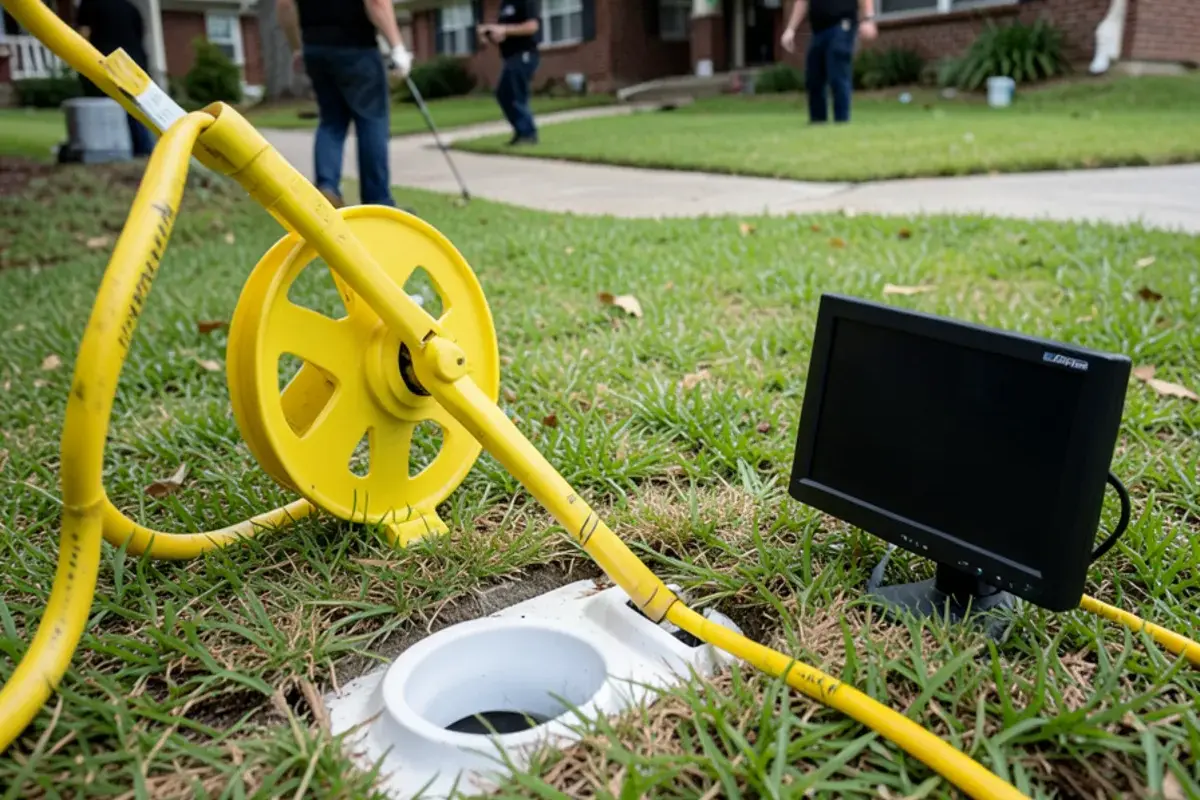
The camera is a separate line item on many quotes. The same guide puts a sewer line inspection at about $275 to $1,175, with larger homes and complex layouts costing more. Treat that as a national figure from 2024 too.
Your cost depends on these factors:
- Access, including whether there is a usable cleanout
- Length of the line and depth of the blockage
- Whether a camera pass is part of the job
- Whether roots or damage add repair work
A cheap snake that you repeat every few months can pass the cost of one proper cleaning. Count the visits before you decide which is cheaper.
How would our team sequence a repeat clog?
Our team would find the cause before picking the tool. A repeat clog has a reason, and it is one of a short list: buildup, roots, a sag in the line, a crack or what goes down the drain.
Our suggested sequence for any repeat clog:
- Open the line so the household can use it again.
- Run a camera to see why it blocked.
- Clean to match the cause.
- Camera again to confirm the pipe is clear and to check for hidden damage.
- Fix the cause, whether that means habits, roots or a section of pipe.
Step 4 gets skipped most often. Heavy grease can hide a crack, and only a clean pipe shows the real wall.
Tell the plumber about anything you poured down the drain. Caustic drain opener sitting in a stopped line can splash back on whoever opens it, and it does nothing for grease on a pipe wall anyway.
Maintenance schedules deserve some skepticism. Bob Vila's guide says professionals recommend jetting about every one to two years, with more for older or clog-prone systems. That can suit a heavy-use kitchen line, but a clean line with no history may never need it. Our team would let the camera footage set the interval.
How do you make the call?
Use a snake for a first-time, single-fixture clog. Use jetting for repeat buildup in a line that a camera has cleared as sound. Use a camera first for old pipe, odd smells or several fixtures at once. Call us with what you are seeing and how often it happens, and we can start with drain cleaning or a camera, whichever the symptoms point to.
Common questions
How often should a kitchen line be jetted?
Only as often as the line needs it, and most homes need it rarely, if ever. A kitchen drain that clogs more than once or twice a year is the usual candidate. Fix the cause first, since grease habits or a sag in the pipe will rebuild the blockage. A restaurant is different and usually runs on a set schedule.
Can I rent a drum auger and do it myself?
For a sink, a small hand auger is a reasonable homeowner tool. A rented motorized drum machine is harder to control, and Wikipedia notes that unskilled use can damage plastic pipe and copper tubing. If you reach a main line, have a sewer smell or get sewage in a tub, stop and bring in a plumber.
Will hydro jetting clear tree roots for good?
No. Jetting can strip fine roots from the pipe and cut back some growth, but the joint that let them in stays open. For thick roots, a plumber usually cuts first with a cable machine and then jets the wall clean. The roots will return until that joint is sealed or replaced, so ask for a camera pass afterward.
Is it safe to snake a drain that has had chemical drain cleaner poured in it?
Not without warning whoever does the work. Caustic or acid cleaner can sit in a stopped trap and splash when a cable moves it, which can burn skin and eyes. Tell the plumber the product and when you used it. Wear gloves and eye protection if you are running a hand auger, and flush with plenty of water once the line opens.
Same drain, same clog, third time? Call and describe the pattern.
- ★ 5.0 on Google, 18 reviews
- Sun–Thu 7 AM–8 PM · Fri 7 AM–6 PM · Sat closed
- Clear, upfront quote
Written by the PipeElectric team
PipeElectric is a Houston plumbing company with 18 Google reviews and a 5.0 rating. Read about us.