
By the PipeElectric team · Published October 30, 2026 · Updated October 30, 2026
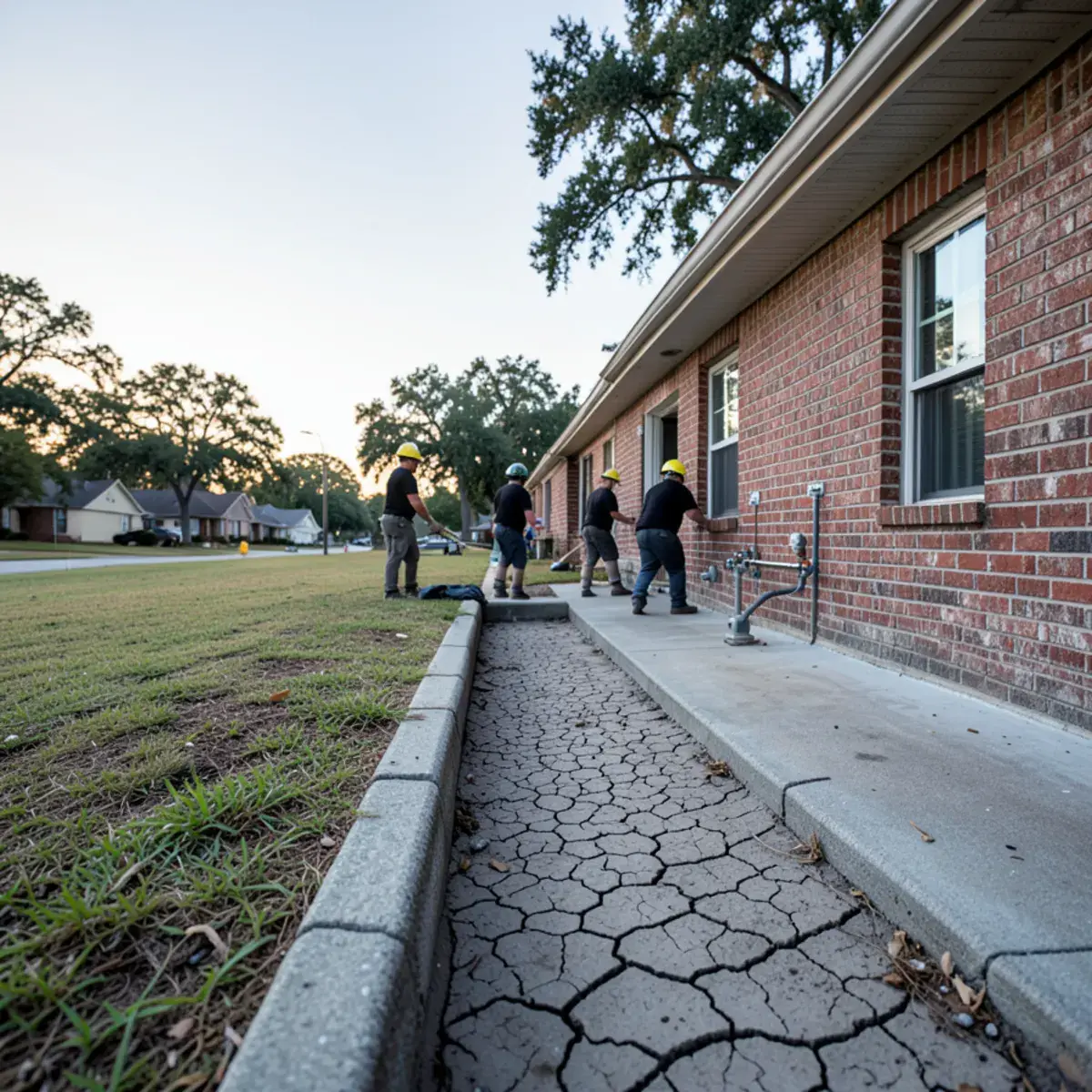
Clay soil plumbing in Houston fails because the ground under a slab keeps moving. The clay swells when wet and shrinks when dry, the slab shifts with it, and pipes set in or under the concrete absorb that movement as bending. Breaks tend to show up where a pipe cannot flex, such as a fitting or a slab penetration.
What kind of clay sits under Houston homes?
Most Houston-area homes sit on heavy coastal prairie clay. USDA soil surveys describe the Lake Charles series across the coastal prairies of southeast Texas, mainly between the Colorado and Trinity Rivers, with its type location in Fort Bend County. It formed from clayey deposits of the Beaumont Formation and holds 45 to 60 percent clay.
The clay mineral matters more than the color. USDA classes these soils as smectitic, which is the shrink-and-swell family of clays. The Beaumont series farther east runs 42 to 60 percent clay and comes from the same formation.
One common mix-up: Houston Black soil is not the Houston soil. USDA places it in the Blackland Prairies, with its type location in Travis County.
Floor cracks and a jumping water bill? Call before the problem spreads.
- ★ 5.0 on Google, 18 reviews
- Sun–Thu 7 AM–8 PM · Fri 7 AM–6 PM · Sat closed
- Clear, upfront quote
How does moving clay break a pipe?
Moving clay breaks a pipe by bending it at points that cannot flex. The damage builds over repeated wet and dry cycles:
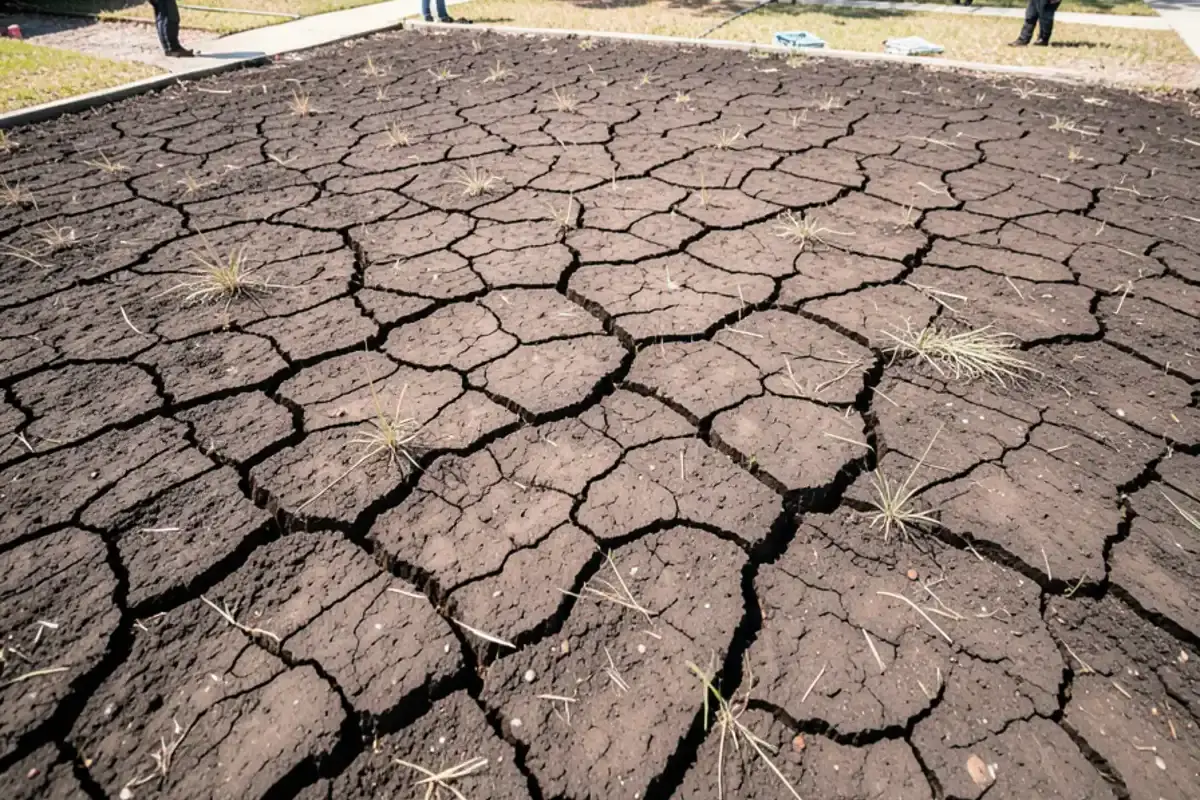
- The soil dries. USDA says Lake Charles soils crack 1/2 to 2 inches wide at the surface, down to 12 inches or more, and stay open 60 to 90 days in most years.
- The slab edge loses support. Soil at the perimeter dries faster than soil under the middle of the house.
- Rain arrives. USDA notes that water enters rapidly through open cracks, then moves very slowly once the soil swells shut.
- The clay swells unevenly. Wet spots push up while dry spots stay low.
- The pipe takes the load. The slab flexes a small amount, and the pipe in it or under it has to follow.
Each cycle adds fatigue. A joint that survived 20 summers can let go on the next one, which is why a leak can appear with no visible event.
Houston's weather keeps that cycle running. NOAA normals show about 53 inches of rain a year and about 102 days at or above 90 degrees, so the ground swings between soaked and baked.
Which lines fail first under a slab?
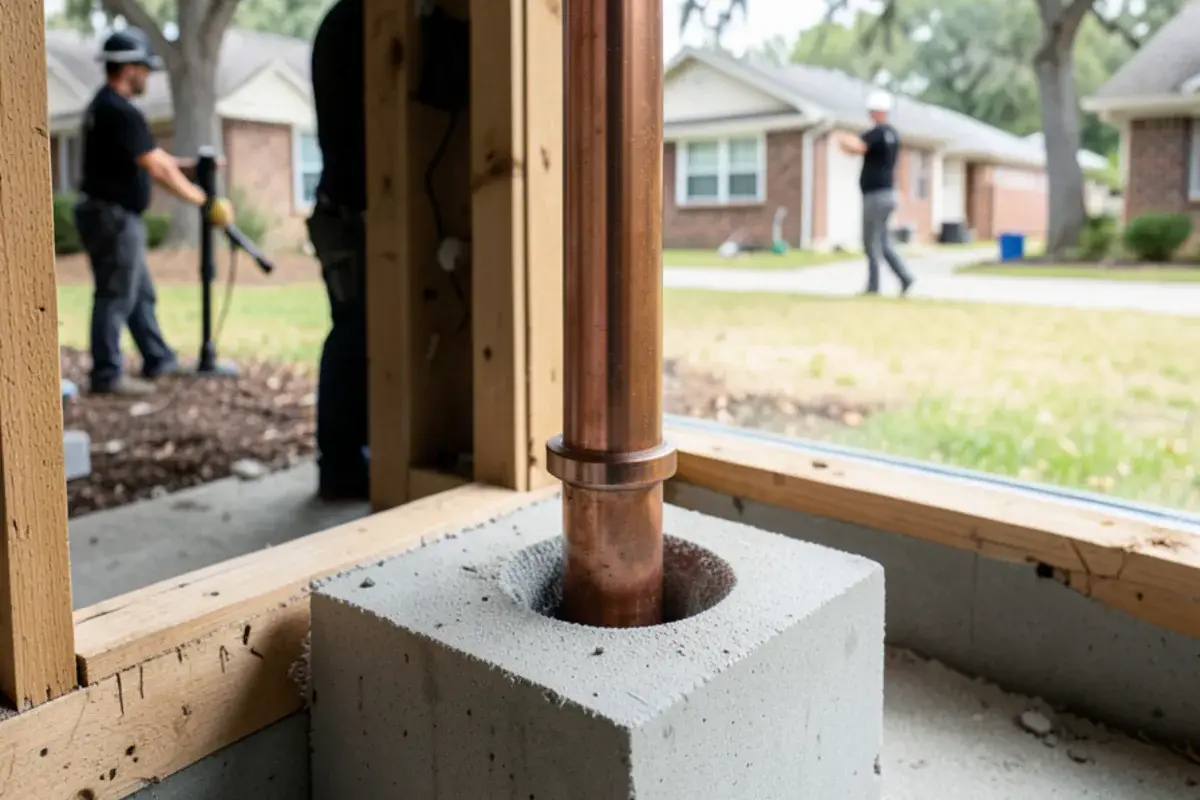
Rigid connections fail first, and the pattern differs by line:
| Line | Weak point | What you notice |
|---|---|---|
| Copper supply under the slab | Bends, joints and rub points against concrete | Warm floor, running sound, meter moving |
| Cast iron drain | Hub joints and thinned pipe wall | Slow drains, sewer smell, repeat clogs |
| PVC drain | Glued fittings and lost slope | Standing water in the line, gurgling |
| Main sewer line | Connection at the slab edge | Several fixtures backing up together |
Lost slope is the quiet one. A drain can stay intact and still stop working well if a section sags, because waste settles in the low spot. A sewer camera shows that belly, and a repair plan for sewer lines after soil shift follows from what the camera finds.
What does clay soil plumbing damage look like in Houston?
Clay soil plumbing damage usually shows up inside the house before it shows up in the yard. Look for these signs:
- A water meter that moves with every fixture off
- A warm patch on tile or a damp strip of carpet
- New diagonal cracks at door corners
- Doors that stick after a dry stretch, then free up after rain
- More than one drain slowing at the same time
- Sewer smell near a floor or wall with no plumbing fixture
Any one of these has other possible causes. Two or more together justify a proper leak detection visit rather than more watching.
City numbers point the same way on a larger scale. ABC13, citing Houston Public Works, reported leak reports rising from 9,143 in 2020 to 13,911 in 2023. Many causes sit behind that count, but the city's pipes lie in the same ground as yours.
Does your foundation type change the risk?
Yes. The foundation decides where the pipe sits and how it takes the movement:
| Foundation | Where the pipes run | What to watch for |
|---|---|---|
| Conventional slab | Under or inside the concrete | Stress at slab penetrations, lost drain slope |
| Post-tension slab | Under concrete that holds steel cables | Cables must be located before any cutting |
| Pier and beam | In the crawl space, hung from framing | Failed hangers and sagging runs, but easy access |
Post-tension slabs deserve a warning. The cables sit under high tension, and a saw or core drill that hits one can injure someone and weaken the slab. Anyone opening the floor should confirm the slab type first, and a homeowner should ask that question before work starts.
Is clay the only thing moving under Houston?
No. Surface faults move the ground on a larger scale. USGS mapping, done with the Harris-Galveston Coastal Subsidence District, cites more than 150 historically active faults in the Houston area and says their movement has caused substantial, costly damage to private and public infrastructure.
The signs differ from clay damage. Clay movement comes and goes with the rain. Fault damage runs in a line, often across a street, a driveway and a house together, and it stays after a wet spell. If a slab crack lines up with a step in the pavement outside, tell the structural engineer. A plumber can repair or reroute a line there, but no pipe work will stop the ground.
What order of checks does our team suggest?
Our team's advice is to rule the plumbing in or out first, because a pipe leak and a foundation problem can each cause the other. A leak under a slab wets the clay in one spot and makes that spot swell. A settling slab can crack a pipe. If you fix only one, the other can return.
The order we suggest for any homeowner:
- Run the meter test with all fixtures off.
- Pressure test hot and cold lines separately.
- Camera the drains if there are any drain symptoms.
- Bring in a structural engineer or foundation company once the plumbing picture is clear.
Keep the results in writing. A foundation specialist will want to know whether active water was under the slab when the movement happened. Ask for the same tests after any slab lift, so you can see what changed.
How can you slow the damage?
You can reduce the swing between wet and dry, even though you cannot stop the clay from moving. These steps help:
- Keep soil moisture steady near the foundation through long dry months
- Slope soil and downspouts away from the slab so water does not pool
- Keep thirsty trees and large shrubs away from the foundation line
- Check the water meter whenever a bill looks wrong
- Fix small leaks early, since each one wets the clay under the slab
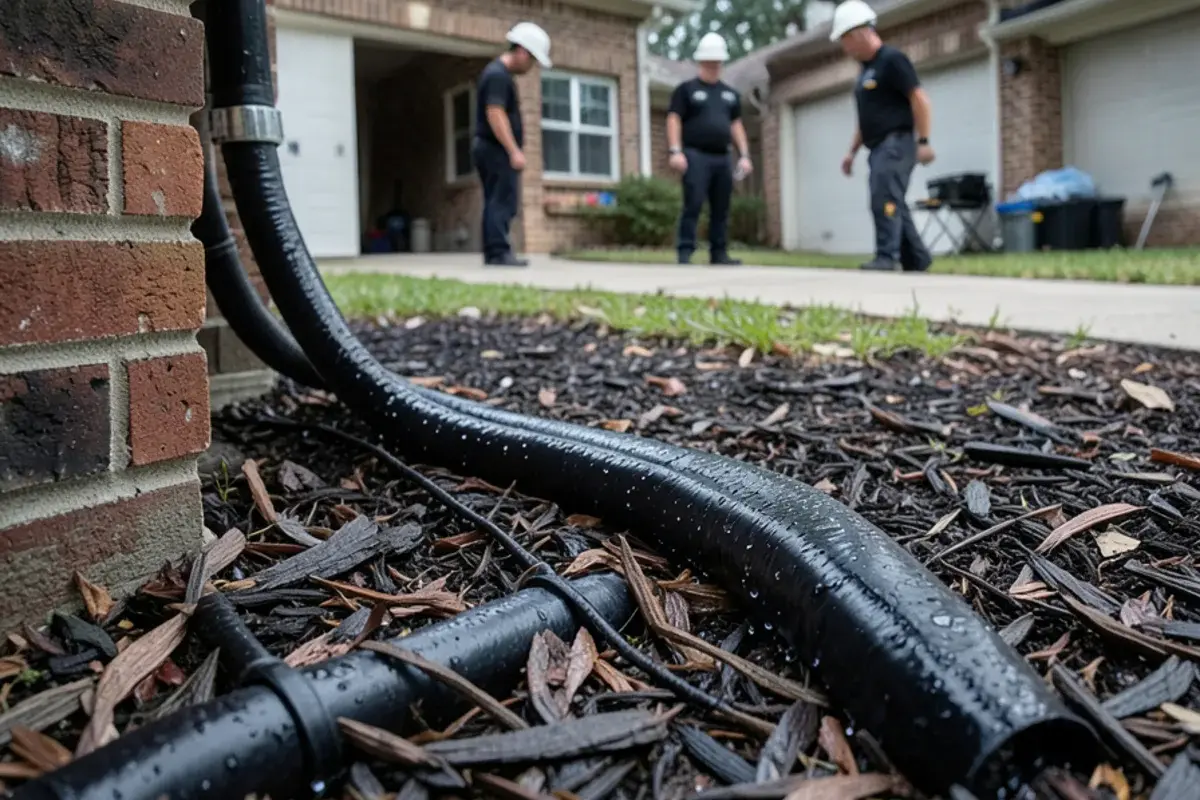
Water with care. A soaker hose set a short distance from the slab, run in moderate sessions, is the usual method. Flooding the bed or pressing a hose against the concrete creates the same uneven soil you are trying to avoid.
Where should you start if the ground has moved?
Start with a meter test today, since it costs nothing and takes minutes. If the meter moves, shut the main valve between uses and schedule slab leak repair to find the break before anyone opens the floor.
We take these calls across Houston, including Spring Valley Village and Bellaire. Tell us what the meter did, when the cracks appeared and how old the house is, and that shapes the first visit.
Common questions
Is Houston Black the soil under Houston homes?
No, despite the name. USDA places the Houston Black series in the Blackland Prairies, with its type location in Travis County. Homes around Houston more often sit on coastal prairie clays formed from the Beaumont Formation, such as the Lake Charles series. Both are expansive, so the plumbing risk is similar, but a soil report for your lot is the only way to know exactly what is there.
Does a new home avoid clay soil pipe problems?
A newer home has newer pipe and usually a better-engineered slab, but it sits on the same clay. Movement can still stress fittings and drain slopes. The difference is that young pipe has more wall left to take the strain. Watch your water meter and drains in any home, whatever its age, and treat a floor crack as a reason to check.
Can foundation repair break pipes under the slab?
Yes. Lifting a slab on piers moves every pipe set in or under it, and a joint that was holding can open. Ask for a static pressure test on the supply lines and a camera or water test on the drains before the lift, then repeat both after it. That record shows what changed and who should look at it.
Does watering the foundation help in Houston?
Yes, if it is even and moderate. The goal is steady soil moisture through a long dry spell, with no soggy patches. Run a soaker hose on a timer, a short distance out from the slab, and adjust it as the cracks close. Heavy watering on one side can swell that side of the house, which is the movement you want to avoid.
Think the ground moved your pipes? Call and walk through the signs.
- ★ 5.0 on Google, 18 reviews
- Sun–Thu 7 AM–8 PM · Fri 7 AM–6 PM · Sat closed
- Clear, upfront quote
Written by the PipeElectric team
PipeElectric is a Houston plumbing company with 18 Google reviews and a 5.0 rating. Read about us.