
By the PipeElectric team · Published October 30, 2026 · Updated October 30, 2026
Restaurant drain maintenance in Houston has a legal floor. The Houston Health Department says every grease interceptor must be fully emptied at least every 90 days unless a waiver is approved, with manifests kept on site for five years. Your kitchen's daily habits decide whether drains stay open between those pump-outs.
What does the City of Houston require?
The Houston Health Department treats restaurants as special waste generators, and its rules are specific. According to the department's page:
- Pump-out: Section 47-512(b) requires each interceptor to be fully evacuated at least quarterly, every 90 days, unless a waiver is approved.
- Permit: Generator permits last one year and must be renewed yearly.
- Before signing: Verify that the trap is clean and completely empty, and that its capacity is noted on the manifest.
- Manifest: Sign the generator portion, keep your copy, and return the copy within 15 days of pump-out from the transporter.
- Records: Keep manifests on site for five years.
- Inspection: Inspectors may check the trap and sample the well to confirm discharge limits.
- Penalties: A notice of violation or citation can follow, with fines of $250 to $2,000 per violation.
- Timing: Inspections are routine or complaint-driven, and the department gives no advance notice.
The department also says a change is proposed to cut the oil and grease limit from 400 mg/L to 200 mg/L, phased in over two years. Check the page for the current status before you plan around it.
Federal rules sit behind all this. Under 40 CFR 403.5, nothing may enter a public sewer in amounts that obstruct flow and cause interference.
Grease trap or grease interceptor?
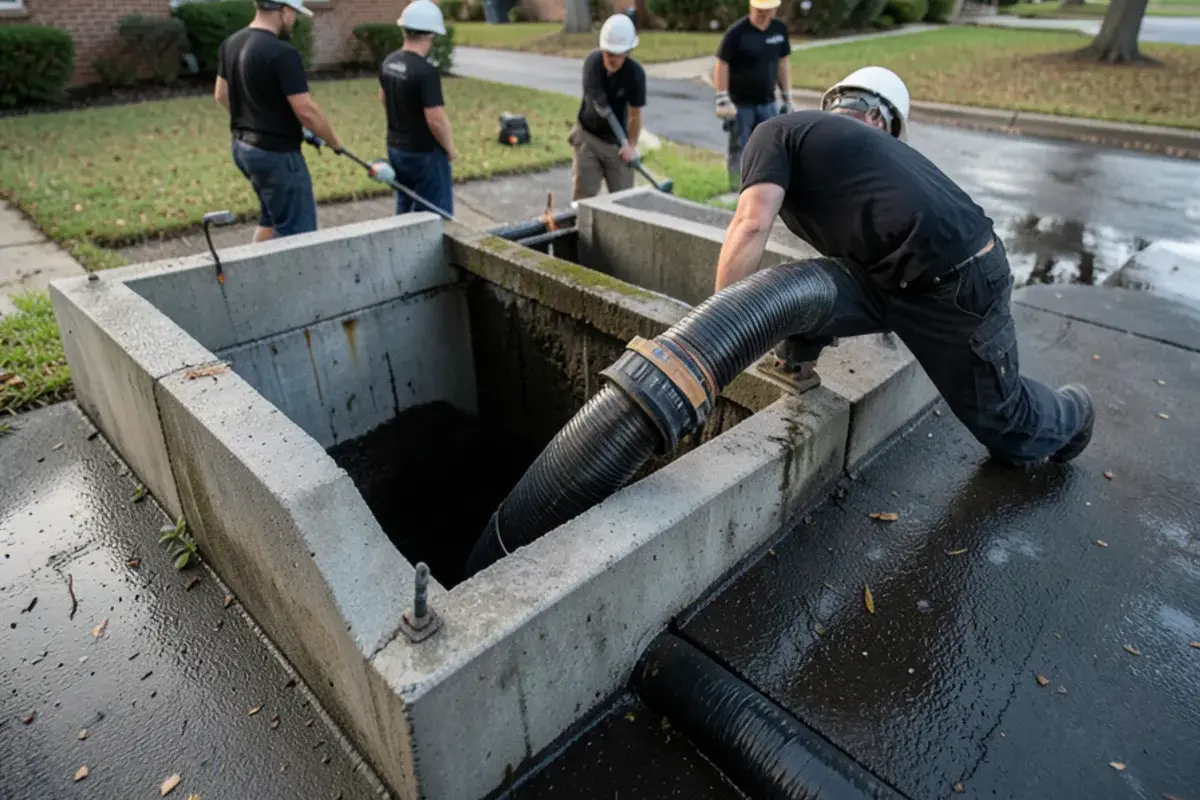
Know which one you have, because the job changes. Houston's page uses "interceptor" broadly and includes grease traps, so the 90-day rule covers both.
| Type | Where it sits | Who usually cleans it | Common problem |
|---|---|---|---|
| Under-sink trap | Indoors, at the sinks | Kitchen staff or a vendor | Small, fills fast, easy to skip |
| Gravity interceptor | Buried outside, with lids | Permitted hauler | Lids buried or sealed, baffles fail |
Food permits in the city go through 8000 North Stadium Drive, 832-393-5100, open weekdays from 7:30 a.m. to 3:30 p.m., according to the department.
Grease trap overdue or line slowing down? Call before the inspector does.
- ★ 5.0 on Google, 18 reviews
- Sun–Thu 7 AM–8 PM · Fri 7 AM–6 PM · Sat closed
- Clear, upfront quote
Is your restaurant outside Houston city limits?
If so, the rules above may not apply, and you should call your own city. Metro kitchens sit in many separate cities. Galena Park, for example, is an incorporated city with its own government, and Houston did not take in its territory. A restaurant there should get its grease and pretreatment rules from Galena Park directly.
The same goes for Pasadena and other cities along the Ship Channel. Ask these questions at the city's public works or environmental office:
- How often must an interceptor be pumped?
- Do you require a permit or registration?
- Which haulers are approved?
- How long must records be kept?
Two points apply well beyond Houston. Guidance from the Texas Commission on Environmental Quality says only registered transporters can legally haul grease trap waste, and a dated sticker on the truck door helps you verify that. Many city programs also add a depth test known as the 25 percent rule, which calls for a pump-out once grease and solids reach a quarter of the liquid depth. Ask whether your city uses it, because a busy kitchen can hit that line well before day 90.
What does a restaurant drain maintenance schedule look like?
A workable schedule ties each job to a day and a name. Adjust this table to your volume and your city's rules:
| When | Job | Owner |
|---|---|---|
| Every shift | Dry-scrape plates and pans, empty sink baskets | Line and dish crew |
| Daily | Clean floor drains and strainers | Closing crew |
| Weekly | Check the under-sink trap, if you have one | Kitchen manager |
| Weekly | Check drain speed at each sink | Kitchen manager |
| Monthly | Measure grease and solids in the interceptor | Manager or vendor |
| Every 90 days or sooner | Full pump-out, with the manifest signed | Hauler and manager |
| Twice a year or as needed | Jet the kitchen lines | Plumber |
| Yearly | Camera the main line, and renew permits | Plumber and owner |
High-volume fryers and buffets can fill an interceptor well before 90 days. The rule sets the maximum gap. Your grease load sets the real one.
Track that load for a few cycles. A dip stick or a vendor's reading after each pump-out will show how fast the layer builds, and that lets you move the schedule on evidence. Keep seldom-used floor drains wet as well. A cup of water poured in each week keeps the trap sealed against sewer gas.
What should the kitchen crew do every shift?
Keep fat out of the drain, because every other step is cleanup. Train these habits from the first day:
- Scrape solids into the trash, not the sink
- Wipe pans before washing
- Pour used oil into the rendering container
- Keep strainers in place at every sink and floor drain
- Avoid sending very hot water down the line to melt grease
- Never pour chemicals into a trap to clear it
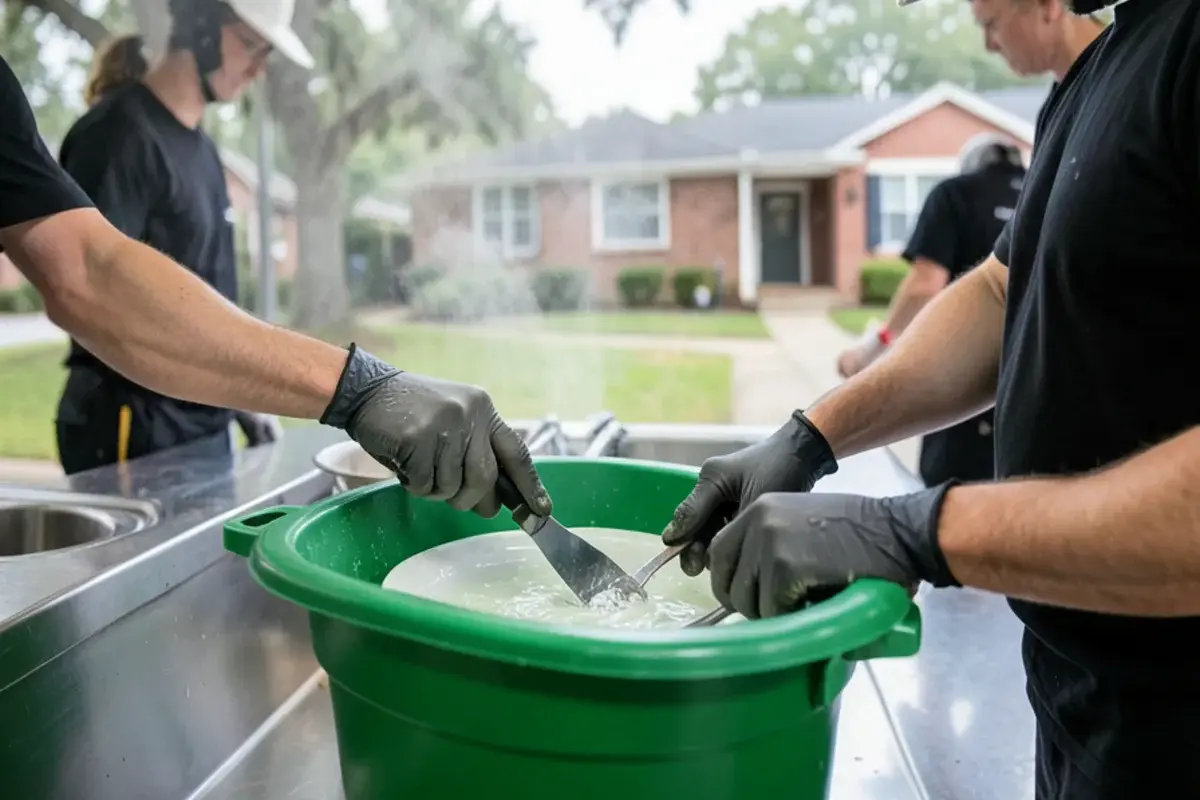
Hot water feels like a solution, but it only moves grease farther down the pipe, where it cools and sticks. That is often how a clog forms past the trap and well into the main line.
What should be in your inspection binder?
Keep one binder, or one shared folder, with everything an inspector may ask for. The Houston Health Department lists these items:
- Your FOG permit
- Five years of manifest copies
- Biological pretreatment invoices, if you use that service
- Your waiver, if you have one
- Past inspection reports
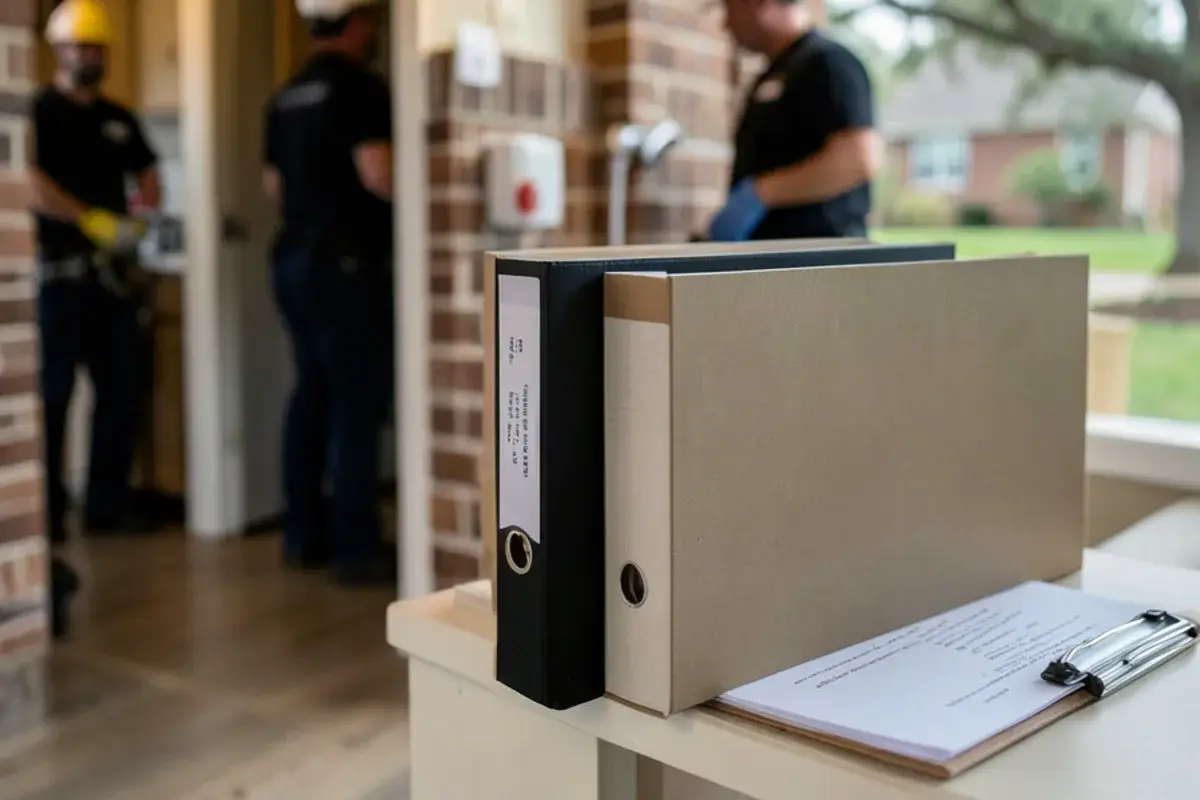
Add your own log of pump dates, jetting visits and any backups. Keep the sample well clean before pump-out, too, as the department advises. Name one person to own the binder, and give them a backup for vacations.
Look past the trap before an inspection. The department says the dumpster, the rendering oil bin and the area around them get checked for upkeep as well, so a spilled oil bin can cost you on a day when your manifests are perfect.
When does grease become a plumbing call?
Grease becomes a plumbing call when the pump-out no longer fixes it. Call if you see any of these:
- Floor drains backing up during the rush
- Slow sinks right after a pump-out
- Sewer odor in the dining room or restrooms
- Water coming up at the mop sink
- The same line clogging twice in a month
Slow drains right after a pump-out point past the trap, usually to a line narrowed by grease. A camera shows the location, and hydro jetting can clear the wall if the pipe is sound. Our commercial drain service page covers how those calls are handled.
Taking over a restaurant space?
Treat the drains as part of the lease check, since you inherit whatever the last tenant left in the line. Do these before you sign, or before you open at the latest:
- Ask the landlord who owns the interceptor and who pays for pump-outs.
- Get the past manifests, and find out the trap's rated capacity.
- Have the interceptor pumped so you can see the baffles and walls.
- Camera the kitchen line and the main to the sewer connection.
- Get a permit in your own name before you start cooking.
- Set up your hauler, your binder and your first pump-out date.
A shared interceptor in a strip center adds a wrinkle. One tenant's habits can load a trap that several kitchens use, so get the pump-out cost and the record keeping written into the lease.
What does our team suggest to kitchen managers?
Our team suggests booking pump-outs and jetting on your slowest day, and treating them like a standing delivery. Emergency work tends to land on your busiest night, because that is when drains carry the most load.
Two smaller points help. Walk the hauler's work before you sign, and check the trap with your own eyes, since your signature confirms that it was emptied. Also ask the plumber to note where lines run and where cleanouts sit. A one-page drain map saves real time on a bad night. For wider work on the building, see our commercial plumbing page.
How do you keep drains and inspectors happy?
Follow the 90-day floor, or your own city's rule, and let your kitchen's volume set anything tighter. Train the crew, keep the binder current and act on the first slow drain. Call during our hours to talk through your lines, and get a clear, upfront quote before work starts.
Common questions
Can a restaurant pump its grease trap less often than every 90 days?
Only with an approved waiver, according to the Houston Health Department. The department's page says quarterly pump-outs apply unless a Notice of Waiver application is submitted and approved. Do not assume your trap qualifies because it looks clean. Read the current form, and keep any approved waiver with your records for the next inspection.
Do bacteria or enzyme products replace pump-outs?
Do not count on it. The Houston Health Department treats biological pretreatment as a separate item, and asks to see invoices from a permitted company if you use it. Those services do not remove the rule to empty the trap. Ask the department before you change your schedule, and check whether the product can push grease farther down the line.
Who is responsible for a grease interceptor in a leased restaurant?
Check your lease, because it can go either way. The operator who holds the food permit is usually the one the inspector talks to, so keep your own manifests even if the landlord books the hauler. Houston's Health Department expects five years of copies on site. In a shared strip center interceptor, get the split in writing before opening day.
Kitchen drains slowing before the dinner rush? Call and describe the line.
- ★ 5.0 on Google, 18 reviews
- Sun–Thu 7 AM–8 PM · Fri 7 AM–6 PM · Sat closed
- Clear, upfront quote
Written by the PipeElectric team
PipeElectric is a Houston plumbing company with 18 Google reviews and a 5.0 rating. Read about us.